

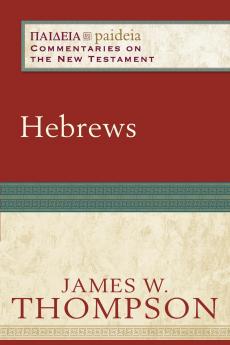

This Book is Out of Stock!
English
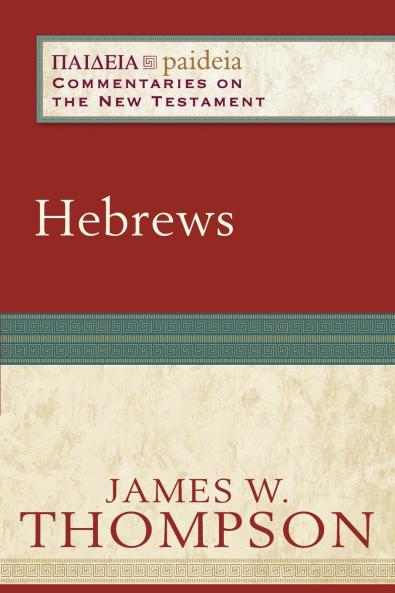


₹2910
₹2926
0.55% OFF
(All inclusive*)
Paperback
Delivery Options
*COD & Shipping Charges may apply on certain items.
Review final details at checkout.
Looking to place a bulk order? SUBMIT DETAILS
*COD & Shipping Charges may apply on certain items.
Review final details at checkout.
₹2910
₹2926
0% OFF
Paperback
Out Of Stock
All inclusive*
About The Book
Description
Author
<p>&lt;i&gt;Hebrews&lt;/i&gt; part of the eighteen-volume Paideia commentary series brings the insight of a veteran teacher and writer to bear on a New Testament book whose rich imagery and memorable phrases have long shaped Christian discourse.&lt;br/&gt;&lt;br/&gt;Paideia commentaries explore how New Testament texts form Christian readers by:&lt;br/&gt;&lt;br/&gt;&amp;bull; Attending to the ancient narrative and rhetorical strategies the text employs&lt;br/&gt;&amp;bull; Showing how the text shapes theological convictions and moral habits&lt;br/&gt;&amp;bull; Commenting on the final canonical form of each New Testament book&lt;br/&gt;&amp;bull; Focusing on the cultural literary and theological settings of the text&lt;br/&gt;&amp;bull; Making judicious use of photos and sidebars in a reader-friendly format&lt;br/&gt;&lt;br/&gt;&amp;quot;A carefully crafted work like Hebrews deserves a commentary that concentrates on the text itself not on opinions and arguments about it; that provides necessary historical information reliably and concisely (here ancient rhetoric); that stimulates the user to think about matters raised by the text. Thompson's commentary does all these things well because he has thought about Hebrews judiciously and deeply.&amp;quot;--&lt;b&gt;Leander E. Keck&lt;/b&gt; Winkley Professor Emeritus of Biblical Theology Yale Divinity School&lt;br/&gt;&lt;br/&gt;&amp;quot;With a firm grasp on the theological ecclesial historical social and literary issues James W. Thompson has produced a commentary on Hebrews that is clear compelling and helpful. In Thompson's hands this often difficult biblical book breaks open with new power and meaning.&amp;quot;--&lt;b&gt;Thomas G. Long&lt;/b&gt; Bandy Professor Emeritus of Preaching Candler School of Theology Emory University</p>

Piracy-free

Assured Quality

Secure Transactions

Fast Delivery

Sustainably Printed
Details
ISBN 13
9780801031915
Publication Date
-01-12-2008
Pages
-348
Weight
-472 grams
Dimensions
-152x229x19.73 mm
