


English


Hardback
₹13547
₹17371
22.01% OFF
(All inclusive*)
Delivery Options
Please enter pincode to check delivery time.
*COD & Shipping Charges may apply on certain items.
Review final details at checkout.
Looking to place a bulk order? SUBMIT DETAILS

Piracy-free

Assured Quality

Secure Transactions
About The Book
Description
Author
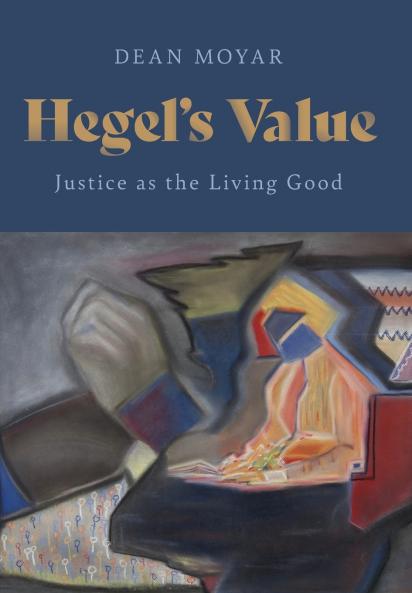
Hegel's <em>Philosophy of Right</em> has long been recognized as the only systematic alternative to the dominant social contract tradition in modern political philosophy. Dean Moyar here takes on the difficult task of reading and representing Hegel's view of <em>justice</em> with the same kind of intuitive appeal that has made social contract theory with its voluntary consent and assignment of rights and privileges such an attractive model. Moyar argues that Hegelian justice depends on a proper understanding of Hegel's theory of <em>value</em> and on the model of <em>life</em> through which the overall conception of value the Good is operationalized. <p/>Closely examining key episodes in <em>Phenomenology of Spirit</em> and the entire <em>Philosophy of Right</em> Moyar shows how Hegel develops his account of justice through an inferentialist method whereby the content of <em>right</em> unfolds into increasingly thick normative structures. He asserts that the theory of value that Hegel develops in tandem with the account of right relies on a productive unity of self-consciousness and life of pure thinking and the natural drives. Moyar argues that Hegel's <em>expressive</em> account of the free will enables him to theorize rights not simply as abstract claims but rather as realizations of value in social contexts of mutual recognition. <p/>Moyar shows that Hegel's account of justice is a living system of institutions centered on a close relation of the economic and political spheres and on an understanding of the law as developing through practices of public reason. Moyar defends Hegel's metaphysics of the State as an account of the sovereignty of the Good and he shows why Hegel thought that philosophy needs to offer an account of world history and reformed religion to buttress the modern social order.<br>
Piracy-free
Assured Quality
Secure Transactions
Delivery Options
Please enter pincode to check delivery time.
*COD & Shipping Charges may apply on certain items.
Review final details at checkout.
Details
ISBN 13
9780197532539
Publication Date
-01-02-2021
Pages
-386
Weight
-639 grams
Dimensions
-156x234x22.23 mm
