

English


₹4394
(All inclusive*)
Paperback
Delivery Options
Please enter pincode to check delivery time.
*COD & Shipping Charges may apply on certain items.
Review final details at checkout.
Looking to place a bulk order? SUBMIT DETAILS
Delivery Options
Please enter pincode to check delivery time.
*COD & Shipping Charges may apply on certain items.
Review final details at checkout.
About The Book
Description
Author
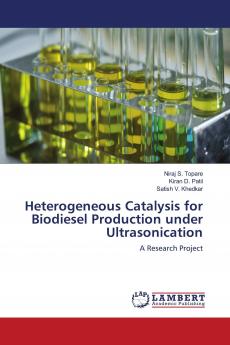
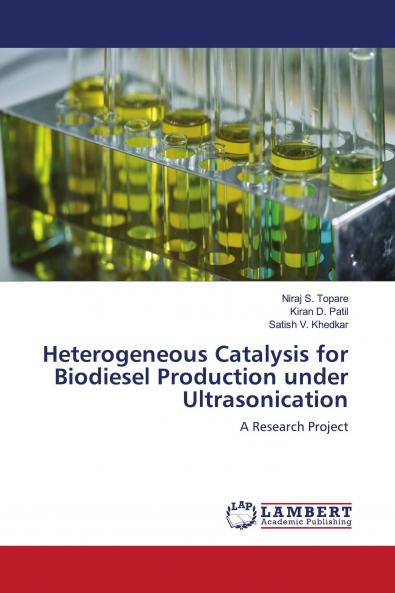
Nowadays scientists search for alternative fuels as fossil fuel depletion environmental concerns and fossil fuels hike in the price. Reduction in biodiesel production costs up to 60–90% with the utilization of waste cooking oil. Biodiesel is a low emissions diesel substitute fuel made from waste lipids renewable resources and animal fats. The most common way to produce biodiesel is through transesterificationusing heterogeneous and homogeneous catalyst/transesterification. Meanwhile the effect of novel processes significantly influenced the final conversion yield and in particular the quality of products such as membrane reactor reactive distillation column reactive absorption ultrasonic and microwave irradiation. This research work mainly focuses on the production of biodiesel fuel using an ultrasonic process. Ultrasonic a non-conventional process technique was applied to directly convert waste cooking oil into biodiesel in a single step. Results obtained from the experiments carried out to produce Biodiesel using Ultrasound and heterogeneous catalysis clearly signifies that it is an efficient method for the production of biodiesel in shorter times with higher yield.

Piracy-free

Assured Quality

Secure Transactions

Fast Delivery

Sustainably Printed
Details
ISBN 13
9786202814744
Publication Date
-01-10-2020
Pages
-56
Weight
-90 grams
Dimensions
-150x220x3.48 mm
