



This Book is Out of Stock!
English


Paperback
₹3959
(All inclusive*)
Delivery Options
*COD & Shipping Charges may apply on certain items.
Review final details at checkout.
Looking to place a bulk order? SUBMIT DETAILS
*COD & Shipping Charges may apply on certain items.
Review final details at checkout.
₹3959
Out Of Stock
All inclusive*
About The Book
Description
Author
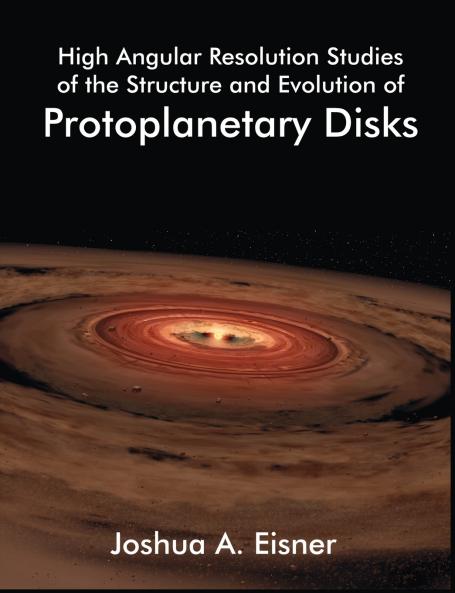
Young stars are surrounded by massive rotating disks of dust and gas which supply a reservoir of material that may be incorporated into planets or accreted onto the central star. In this dissertation I use high angular resolution observations at a range of wavelengths to understand the structure ubiquity and evolutionary timescales of protoplanetary disks.First I describe a study of Class I protostars objects believed to be at an evolutionary stage between collapsing spherical clouds and fully-assembled young stars surrounded by protoplanetary disks. I use a Monte Carlo radiative transfer code to model new 0.9 micron scattered light images 1.3 mm continuum images and broadband spectral energy distributions. This modeling shows that Class I sources are probably surrounded by massive protoplanetary disks embedded in massive infalling envelopes. For the best-fitting models of the circumstellar dust distributions I determine several important properties including envelope and disk masses mass infall rates and system inclinations and I use these results to constrain the evolutionary stage of these objects.Second I discuss observations of the innermost regions of more evolved disks around T Tauri and Herbig Ae/Be stars obtained with the Palomar Testbed and Keck Interferometers. I constrain the spatial and temperature structure of the circumstellar material at sub-AU radii and demonstrate that lower-mass stars are surrounded by inclined disks with puffed-up inner edges 0.1-1 AU from the star. In contrast the truncated inner disks around more massive stars may not puff-up indicating that disk structure depends on stellar properties. I discuss the implications of these results for disk accretion terrestrial planet formation and giant planet migration.Finally I put these detailed studies of disk structure into a broader context by constraining the mass distribution and evolutionary timescales of circumstellar disks. Using the Owens Valley Millimeter Array I mapped the millimeter continuum emission toward >300 low-mass stars in the NGC 2024 and Orion Nebula clusters. These observations demonstrate that the average disk mass in each cluster is comparable to the minimum-mass protosolar nebula and that there may be disk evolution on one million year timescales.

Piracy-free

Assured Quality

Secure Transactions

Fast Delivery

Sustainably Printed
Details
ISBN 13
9781581122800
Publication Date
-25-06-2005
Pages
-240
Weight
-442 grams
Dimensions
-189x246x12.83 mm
