

English


Paperback
₹7560
(All inclusive*)
Delivery Options
Please enter pincode to check delivery time.
*COD & Shipping Charges may apply on certain items.
Review final details at checkout.
Looking to place a bulk order? SUBMIT DETAILS
Delivery Options
Please enter pincode to check delivery time.
*COD & Shipping Charges may apply on certain items.
Review final details at checkout.
About The Book
Description
Author
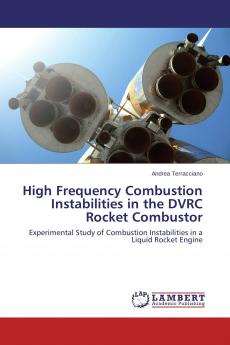
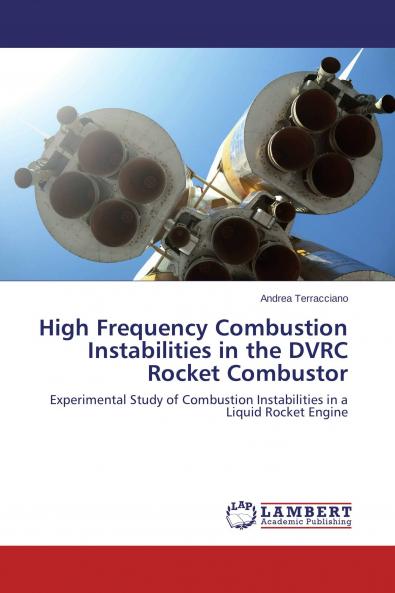
This experimental work regards the studies of the high frequency combustion instabilities inside the DVRC (Discretely Variable Resonance Combustor) a liquid rocket engine developed by the Purdue University at M. J. Zucrow Laboratories on behalf of Nasa Marshall Space Flight Center. The research revealed that given these specific flow conditions combustion instability occurs inside the system during hot fire tests. The most important experimental result of the study showed the oxidizer manifold acting as a damper of the pressure oscillations coming from the combustion chamber and how this can represent an advantage in terms of reduced mechanical loads at the interface with the rest of the feed system. The LEE code based on the linearized Euler equations detected both the combustion instability inside the DVRC and confirmed the positive role of the oxidizer manifold. The best agreement with the experimental results has been observed considering heat addition at the plane of propellants injection into the combustion chamber showing it is reasonable to assume combustion occurs mainly in proximity of that plane as the previous works about CVRC and CFD results had already shown.

Piracy-free

Assured Quality

Secure Transactions

Fast Delivery

Sustainably Printed
Details
ISBN 13
9783659639166
Publication Date
-11-12-2014
Pages
-204
Weight
-284 grams
Dimensions
-150x220x11.08 mm
