

English


₹11930
₹14715
18.93% OFF
(All inclusive*)
Hardback
Delivery Options
Please enter pincode to check delivery time.
*COD & Shipping Charges may apply on certain items.
Review final details at checkout.
Looking to place a bulk order? SUBMIT DETAILS
Delivery Options
Please enter pincode to check delivery time.
*COD & Shipping Charges may apply on certain items.
Review final details at checkout.
About The Book
Description
Author
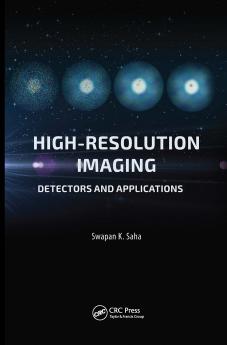
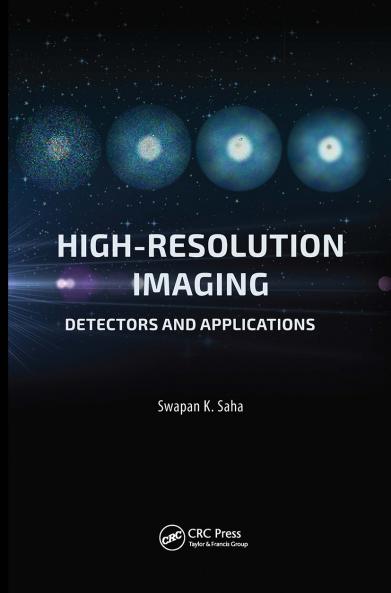
<p>Interferometric observations need snapshots of very high time resolution of the order of (i) frame integration of about 100 Hz or (ii) photon-recording rates of several megahertz (MHz). Detectors play a key role in astronomical observations and since the explanation of the photoelectric effect by Albert Einstein the technology has evolved rather fast. The present-day technology has made it possible to develop large-format complementary metal oxide-semiconductor (CMOS) and charge-coupled device (CCD) array mosaics orthogonal transfer CCDs electron-multiplication CCDs electron-avalanche photodiode arrays and quantum-well infrared (IR) photon detectors. The requirements to develop artifact-free photon shot noise-limited images are higher sensitivity and quantum efficiency reduced noise that includes dark current read-out and amplifier noise smaller point-spread functions and higher spectral bandwidth. This book aims to address such systems technologies and design evaluation and calibration control electronics scientific applications and results.</p><p>One of the fastest growing applications is signal sensing especially wavefront sensing for adaptive optics and fringe tracking for interferometry which is important for long-baseline optical interferometry. The coherence time of the atmosphere is a highly variable parameter. Depending upon the high velocity wind it varies from <p>This book deals with the fundamentals of the important aspects of high-resolution imaging such as electromagnetic radiations particularly optical wavelengths and their distortions due to optical elements and Earth's atmosphere while passing through a detector; semiconductor physics; lasers; fiber optics; photon-detection process; photodetectors; charge-transfer devices; photon-counting devices in visible wavelength; radiation detectors in infrared wavelengths; and detecting systems for high energies.</p>

Piracy-free

Assured Quality

Secure Transactions

Fast Delivery

Sustainably Printed
Details
ISBN 13
9789814613279
Publication Date
-28-01-2015
Pages
-600
Weight
-932 grams
Dimensions
-155.96x233.93x32.83 mm
