


English


₹1691
₹1857
8.94% OFF
(All inclusive*)
Paperback
Delivery Options
Please enter pincode to check delivery time.
*COD & Shipping Charges may apply on certain items.
Review final details at checkout.
Looking to place a bulk order? SUBMIT DETAILS
Delivery Options
Please enter pincode to check delivery time.
*COD & Shipping Charges may apply on certain items.
Review final details at checkout.
About The Book
Description
Author
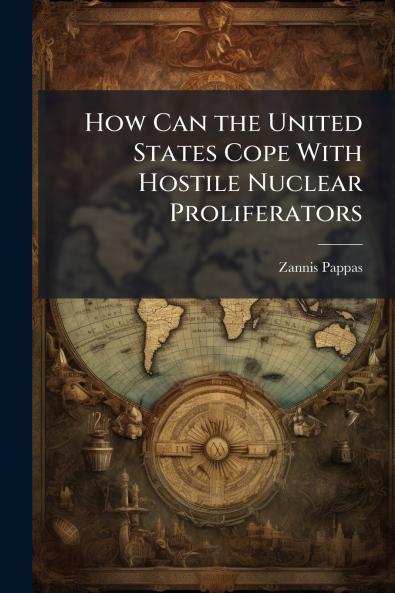
<p>Since the end of World War II US military power has been instrumental in maintaining peace and prosperity for the United States and its allies. During the Cold War both superpowers relied primarily on thousands of nuclear weapons to keep the strategic balance between the West and the Soviet Union. These weapons were kept on strategic alert under the Mutual Assured Destruction doctrine which ensured adequate second strike capability by both sides thus making any nuclear exchange unwinnable. In addition to the five original Nuclear Weapons States (US USSR China UK and France) two other states (India and Israel) developed nuclear weapons capabilities during the Cold War period. Both India and Israel are democracies and countries friendly to the United States.Since the collapse of the Soviet Union an unstable state (Pakistan) and a hostile state (North Korea) successfully tested nuclear weapons. Furthermore another hostile state (Iran) is violating the Nuclear Non-Proliferation Treaty (NPT) and is believed to pursue nuclear weapons capability. As more states acquire nuclear weapons the danger of a deliberate or accidental nuclear detonation increases. Nuclear power programs use the same technologies - uranium enrichment and plutonium reprocessing capabilities - that can be used to make weapons.</p><p>This work has been selected by scholars as being culturally important and is part of the knowledge base of civilization as we know it. This work was reproduced from the original artifact and remains as true to the original work as possible. Therefore you will see the original copyright references library stamps (as most of these works have been housed in our most important libraries around the world) and other notations in the work.</p><p>This work is in the public domain in the United States of America and possibly other nations. Within the United States you may freely copy and distribute this work as no entity (individual or corporate) has a copyright on the body of the work.</p><p>As a reproduction of a historical artifact this work may contain missing or blurred pages poor pictures errant marks etc. Scholars believe and we concur that this work is important enough to be preserved reproduced and made generally available to the public. We appreciate your support of the preservation process and thank you for being an important part of keeping this knowledge alive and relevant.</p>

Piracy-free

Assured Quality

Secure Transactions

Fast Delivery

Sustainably Printed
Details
ISBN 13
9781288417094
Publication Date
-07-12-2012
Pages
-70
Weight
-114 grams
Dimensions
-156x234x3.79 mm
