




by
John Lok
English







Paperback
₹611
₹759
19.5% OFF
(All inclusive*)
Delivery Options
Please enter pincode to check delivery time.
*COD & Shipping Charges may apply on certain items.
Review final details at checkout.
Looking to place a bulk order? SUBMIT DETAILS
Delivery Options
Please enter pincode to check delivery time.
*COD & Shipping Charges may apply on certain items.
Review final details at checkout.
About The Book
Description
Author
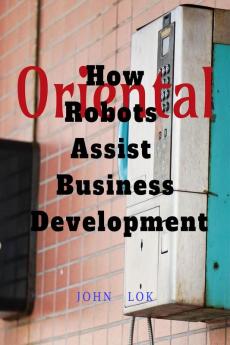
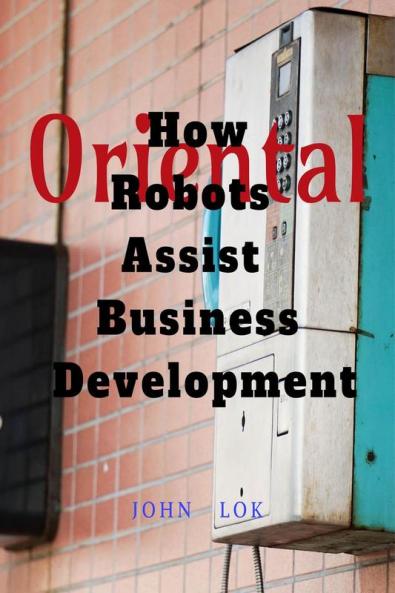
<p>The Economic Impact of Robotics and Automation</p><p>The integration of robotics into the global economy represents one of the most significant technological shifts since the Industrial Revolution. As machines transition from performing repetitive manual labor in manufacturing to executing complex cognitive tasks in professional services the implications for productivity employment and economic growth are profound. Scholars and economists have long debated whether this transition acts as a catalyst for unprecedented prosperity or a harbinger of structural unemployment and social instability.</p><p>As noted by my analysis of business development the deployment of robotics can significantly enhance operational efficiency potentially driving economic growth by allowing human capital to shift toward higher-value creative and strategic roles</p><p>.Mathematically if we represent output Y as a function of capital K labor L and technology A the growth rate can be expressed as:ẎY=ȦA+αK̇K+(1−α)L̇LWhere α represents the output elasticity of capital. As robotics increases the efficiency of capital (A) the potential for sustained economic expansion grows provided that the labor force adapts to the changing requirements of the market.<br/> </p>

Piracy-free

Assured Quality

Secure Transactions

Fast Delivery

Sustainably Printed
Details
ISBN 13
9798886411959
Publication Date
-24-03-2022
Pages
-104
Weight
-266 grams
Dimensions
-215.9x279.4x5.94 mm
