

English


₹8866
₹12666
30% OFF
(All inclusive*)
Paperback
Delivery Options
Please enter pincode to check delivery time.
*COD & Shipping Charges may apply on certain items.
Review final details at checkout.
Looking to place a bulk order? SUBMIT DETAILS
Delivery Options
Please enter pincode to check delivery time.
*COD & Shipping Charges may apply on certain items.
Review final details at checkout.
About The Book
Description
Author
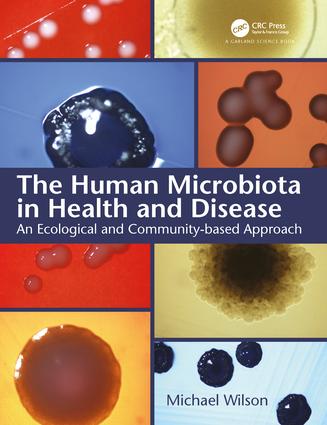
<p>A human being consists of a mammalian component and a multiplicity of microbes collectively referred to as the microbiota or microbiome with which it has a symbiotic relationship. The microbiota is comprised of a variety of communities the composition of each being dependent on the body site it inhabits. This community variation arises because the numerous locations on a human being provide very different environments each of which favors the establishment of a distinct microbial community. Each community consists of bacteria fungi and viruses with in some cases archaea and/or protozoa.</p><p>It is increasingly being recognized that the indigenous microbiota plays an important role in maintaining the health of its human host. However changes in the overall composition of a microbial community at a body site or an increase in the proportion of a particular species in that community can result in disease or other adverse consequences for the host. </p><p>The Human Microbiota in Health and Disease: An Ecological and Community-Based Approach describes the nature of the various communities inhabiting humans as well as the important roles they play in human health and disease. It discusses techniques used to determine microbial community composition and features a chapter devoted to the many factors that underlie this mammalian–microbe symbiosis. Uniquely the book adopts an ecological approach to examining the microbial community’s composition at a particular body site and why certain factors can shift a community from a eubiotic to a dysbiotic state.</p><p>The book is for undergraduates and postgraduates on courses with a module on the indigenous microbiota of humans. It will also be useful to scientists clinicians and others seeking information on the human microbiota and its role in health and disease. </p>

Piracy-free

Assured Quality

Secure Transactions

Fast Delivery

Sustainably Printed
Details
ISBN 13
9780815345855
Publication Date
-10-09-2018
Pages
-504
Weight
-1403 grams
Dimensions
-218.95x276.1x26.68 mm
