


English




Paperback
₹4916
₹6397
23.15% OFF
(All inclusive*)
Delivery Options
Please enter pincode to check delivery time.
*COD & Shipping Charges may apply on certain items.
Review final details at checkout.
Looking to place a bulk order? SUBMIT DETAILS
Delivery Options
Please enter pincode to check delivery time.
*COD & Shipping Charges may apply on certain items.
Review final details at checkout.
About The Book
Description
Author
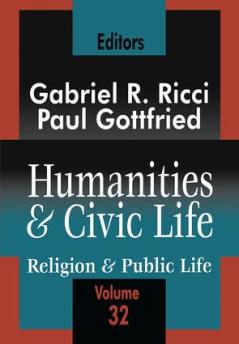
<p>This volume in <em>Religion and Public Life</em> a series on religion and public affairs provides a wide-ranging forum for differing views on religious and ethical considerations. The contributions address the decline of social capital-those patterns of behavior which are conducive to self-governance and the spirit of self-reliance-and its relation to the demise of the civic-humanist tradition in American education. The unifying theme is that classical studies do not merely result in individual mastery over a particular technique or body of knowledge but also link the individual to the polity and even to the whole of the cosmic order. At the same time American republicanism in its exaltation of the common man from the Jeffersonian agrarian soldier to the apotheosis of Lincoln tempers the classical ideal into something less exalted if more democratic. The effects on the contemporary state of the liberal arts curriculum are demonstrated in articles critical of the market-model university. Two essays explore the historical and philosophical significance of the discipline of rhetoric that has suffered under the hegemony of rationalistic philosophy. A concluding contribution invokes Giambattista Vico as an eloquent defender of the humanities. <em>Humanities and Civic Life</em> includes: Rome Florence and Philadelphia: Using the History of the Humanities to Renew Our Civic Life by Robert E. Proctor; The Dark Fields of the Republic: The Persistence of Republican Thought in American History by David Brown; Unleashing the Humanities by Robert Weisbuch; Liberal Arts: Listening to Faculty by Dennis O'Brien; Historical Consciousness in Antiquity by Paul Gottfried; Taking the Measure of Relativism and the Civic Virtue of Rhetoric by Gabriel R. Ricci; The River: A Vichian Dialogue on Humanistic Education by Randall E. Auxier.</p>

Piracy-free

Assured Quality

Secure Transactions

Fast Delivery

Sustainably Printed
Details
ISBN 13
9780765808615
Publication Date
-30-11-2001
Pages
-112
Weight
-210 grams
Dimensions
-176x254x6.35 mm
