


English


Hardback
₹17035
₹21843
22.01% OFF
(All inclusive*)
Delivery Options
Please enter pincode to check delivery time.
*COD & Shipping Charges may apply on certain items.
Review final details at checkout.
Looking to place a bulk order? SUBMIT DETAILS
Delivery Options
Please enter pincode to check delivery time.
*COD & Shipping Charges may apply on certain items.
Review final details at checkout.
About The Book
Description
Author
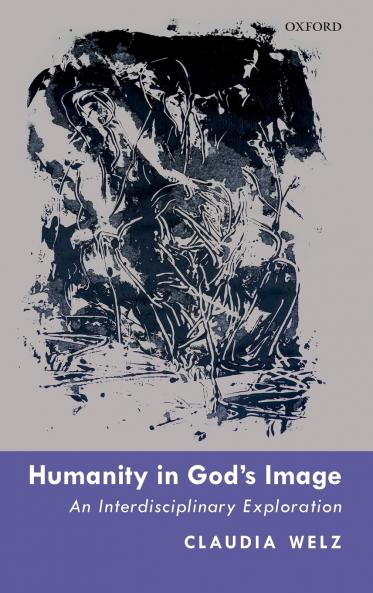
How can we in our times understand the biblical concept that human beings have been created in the image of an invisible God? This is a perennial but increasingly pressing question that lies at the heart of theological anthropology. <em>Humanity in God's Image: An Interdisciplinary Exploration</em> clarifies the meaning of this concept traces different Jewish and Christian interpretations of being created in God's image and reconsiders the significance of the <em>imago Dei</em> in a post-Holocaust context. As normative counter-factual notions human dignity and the <em>imago Dei</em> challenge us to see more. <p/>Claudia Welz offers an interdisciplinary exploration of theological and ethical visions of the invisible. By analyzing poetry and art Welz exemplifies human self-understanding in the interface between the visual and the linguistic. The content of the <em>imago Dei</em> cannot be defined apart from the image carrier: an embodied creature. Compared to verbal visual and mental images how does this creature as a living image refer to God--like a metaphor a mimetic mirror or an elusive trace? Combining hermeneutical and phenomenological perspectives with philosophy of religion and philosophy of language semiotics art history and literary studies Welz regards the imago Dei as a complex sign that is at once iconic indexical and symbolical--pointing beyond itself.<br>

Piracy-free

Assured Quality

Secure Transactions
Details
ISBN 13
9780198784982
Publication Date
-01-10-2016
Pages
-344
Weight
-582 grams
Dimensions
-156x234x20.64 mm
