

English



Hardback
₹12610
₹14927
15.52% OFF
(All inclusive*)
Delivery Options
Please enter pincode to check delivery time.
*COD & Shipping Charges may apply on certain items.
Review final details at checkout.
Looking to place a bulk order? SUBMIT DETAILS
Delivery Options
Please enter pincode to check delivery time.
*COD & Shipping Charges may apply on certain items.
Review final details at checkout.
About The Book
Description
Author(s)
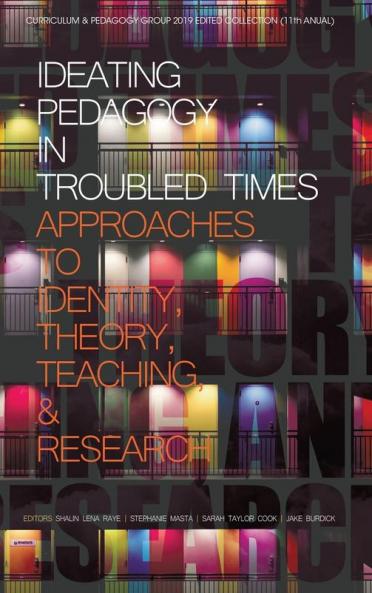
<p>We began the call for this book by asking authors to <em>ideate on</em> activism -to take up and seek to extend- the interbraided values from the Curriculum and Pedagogy group&rsquo;s espoused mission and vision collocating activist ideologies theoretical traditions and practical orientations as a means of creatively reflectively and productively responding to the increasingly dire social moment. This moment is framed by a landscape denigrated beyond even Pinar&rsquo;s (2004) original declaration of the present-as-nightmare. The current catastrophic political climate provides challenges and (albeit scant) opportunities for curriculum scholars and workers as we reflect on past and future directions of our field and grapple with our locations and roles as educators researchers practitioners and beings in the world. These troubled times force us to think critically about our scholarship and pedagogy our influence on educational practices in multiple registers and the surrounding communities we claim to serve. This is where the call began: from a desire to think through modern conceptions regarding what <em>counts</em> as activism in the fields of education curriculum and pedagogy and to consider how activist voices and enactments might emerge differently through curriculum and pedagogy writ large.</p><p>A guiding source of inspiration for this book weaving among the emerging themes between the collected manuscripts reflections and poems was a passage in Sara Ahmed&rsquo;s (2013) book <em>The Cultural Politics of Emotion</em>. In this passage Ahmed works through the complicated relationship between the <em>testimonies</em> of pain that injustice causes the <em>recognition</em> of this pain and the potential of these <em>wounds </em>to move us into a different relationship with healing (p. 200). The chapters reflections and poems within this volume thus effect a collective ideation on how specific cultural politics and deleterious ideological formations &ndash;&nbsp;racism colonialism homophobia ableism to name only a few &ndash; persist and mobilize. The authors seek to expose and name some of these injustices asking readers not only <em>see</em> and <em>hear</em> these experiences but to inhabit our complicities in their promulgation.</p><p>It is important to acknowledge that these named social troubles do not exist in isolation and will enmesh weave wind and entangle with one another. The section headings parallel Ahmed&rsquo;s (2013) own ideations: testimony recognition and wounds not as a formula to follow as an activist call or as a model for a means to a more just end but as a way to engage in these issues as a trope of activist confrontation of readers who are as many of our authors suggest complicit in maintaining many of these social troubles. The chapters do not need to be read in any particular order though the ordering of the chapters moves from the naming of social troubles to showing how teaching research and theory ask us to take a more active role in recognizing and acknowledging the prevalence of these issues and then theorizing ways to engage the wounds.</p>

Piracy-free

Assured Quality

Secure Transactions

Fast Delivery

Sustainably Printed
Details
ISBN 13
9781641138659
Publication Date
-07-10-2019
Pages
-274
Weight
-486 grams
Dimensions
-156x234x15.88 mm
