


English


Paperback
₹6824
(All inclusive*)
Delivery Options
Please enter pincode to check delivery time.
*COD & Shipping Charges may apply on certain items.
Review final details at checkout.
Looking to place a bulk order? SUBMIT DETAILS
Delivery Options
Please enter pincode to check delivery time.
*COD & Shipping Charges may apply on certain items.
Review final details at checkout.
About The Book
Description
Author
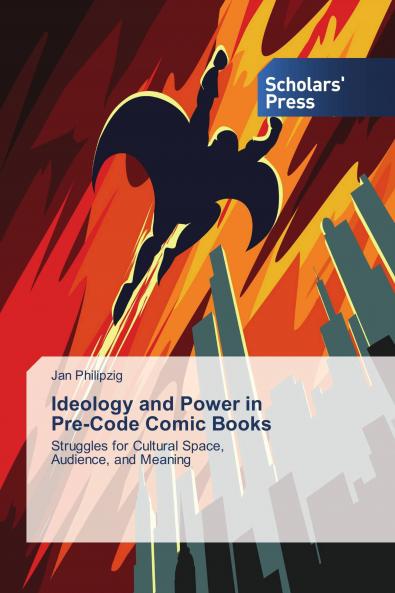
Drawing on the theories of cultural studies this book delivers a wide range of new and surprising insights into the Golden Age of American Comic Books. It traces the medium’s cultural roots its rise to popularity and its persistent struggles for meanings cultural space and an audience. Characters genres stereotypes myths and many other narrative elements are discussed as encodings of ideology thereby exposing underlying assumptions of class race nationalism sexism and ageism. Some pre-Code comic books point to themselves as textual constructs demystifying the fictional sphere by foregrounding their intertextual relationships as well as their own production or reception. This study pioneers the systematic analysis of comic-book reflexivity. It investigates within a matrix of historical factors the commercial social and cultural functions of reflexive devices - an enterprise that reveals deep cultural ambivalences toward the medium and its assumed effects on readers. Combining a solid theoretical frame with in-depth research the book provides an insightful and entertaining examination of the most popular and influential comic books of the Golden Age.

Piracy-free

Assured Quality

Secure Transactions

Fast Delivery

Sustainably Printed
Details
ISBN 13
9783659838118
Publication Date
-22-04-2016
Pages
-340
Weight
-438 grams
Dimensions
-150x220x18.07 mm
