


English
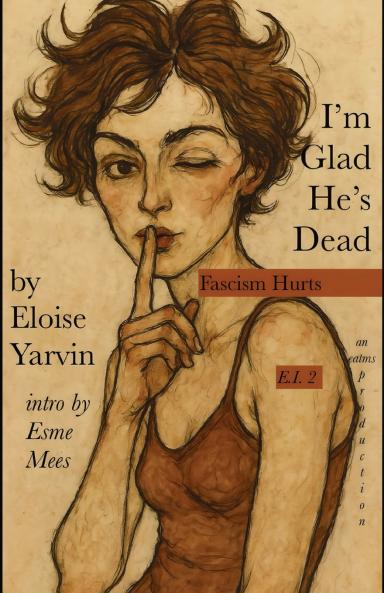



Paperback
₹1000
₹1441
30.6% OFF
(All inclusive*)
Delivery Options
Please enter pincode to check delivery time.
*COD & Shipping Charges may apply on certain items.
Review final details at checkout.
Looking to place a bulk order? SUBMIT DETAILS
Delivery Options
Please enter pincode to check delivery time.
*COD & Shipping Charges may apply on certain items.
Review final details at checkout.
About The Book
Description
Author(s)
<p>I’m Glad He’s Dead: Fascism Hurts is a dystopian political novel built around testimony grief rage and the afterlife of authoritarian violence. Set in a basement chamber where survivors are brought in one by one to answer a brutal question “Who are you glad is dead?” the book turns confession into structure and witness into narrative force. Each chapter opens another account of damage done by men in power by pastors politicians police war planners bureaucrats and other enforcers of a fascist order that calls itself security discipline morality or law. What emerges is not a revenge fantasy in any simple sense but a record of what authoritarian systems do to bodies families memory and language once they are allowed to rule. </p><p>The novel moves case by case through bombings sexual violence reproductive control environmental destruction religious manipulation border brutality and other forms of systematized harm all filtered through a chamber narrative that gives the book its ritual intensity. The recurring question is not whether the dead deserve sympathy but what it means when their death is the only thing that stops further damage. That makes the book morally sharp rather than morally tidy. It is interested in pain yes but also in naming testimony survival and the difference between justice and the mere stopping of harm. This is political fiction with a severe frame: part interrogation room part grief archive part anti-fascist witness stand. </p><p>For readers of dystopian political fiction anti-authoritarian literature feminist rage fiction chamber novels and testimony-driven narratives I’m Glad He’s Dead offers something direct and memorable. It is stripped down in form emotionally harsh and built around the insistence that suffering be named plainly instead of turned into acceptable losses policy language or moral abstraction. Rather than asking readers to sympathize with power it stays with the harmed the surviving and the ones left to speak after the damage is done. </p>

Piracy-free

Assured Quality

Secure Transactions

Fast Delivery

Sustainably Printed
Details
ISBN 13
9781966014324
Publication Date
-13-10-2025
Pages
-123
Weight
-155 grams
Dimensions
-139.7x215.9x7.25 mm
