

English


₹3649
₹4194
13% OFF
(All inclusive*)
Paperback
Delivery Options
Please enter pincode to check delivery time.
*COD & Shipping Charges may apply on certain items.
Review final details at checkout.
Looking to place a bulk order? SUBMIT DETAILS
Delivery Options
Please enter pincode to check delivery time.
*COD & Shipping Charges may apply on certain items.
Review final details at checkout.
About The Book
Description
Author
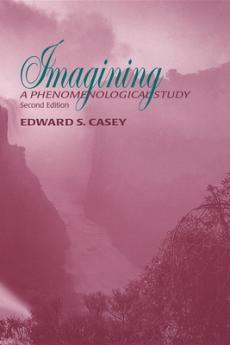
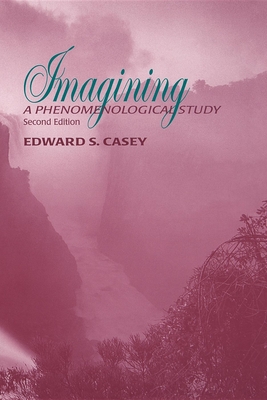
<p>Imagining<br />A Phenomenological Study<br />Second Edition<br />Edward S. Casey<br /><br />A classic firsthand account of the lived character of imaginative experience.<br /><br />This scrupulous lucid study is destined to become a touchstone for all future writings on imagination. --Library Journal<br /><br />Casey's work is doubly valuable--for its major substantive contribution to our understanding of a significant mental activity as well as for its exemplary presentation of the method of phenomenological analysis. --Contemporary Psychology<br /><br />. . . an important addition to phenomenological philosophy and to the humanities generally. --Choice<br /><br />. . . deliberately and consistently phenomenological oriented throughout to the basically intentional character of experience and disciplined by the requirement of proceeding by way of concrete description. . . . [Imagining] is an exceptionally well-written work. --International Philosophical Quarterly<br /><br />Drawing on his own experiences of imagining Edward S. Casey describes the essential forms that imagination assumes in everyday life. In a detailed analysis of the fundamental features of all imaginative experience Casey shows imagining to be eidetically distinct from perceiving and defines it as a radically autonomous act involving a characteristic freedom of mind. A new preface places Imagining within the context of current issues in philosophy and psychology.<br /><br />[use one Casey bio for both Imagining and Remembering]<br />Edward S. Casey is Professor of Philosophy at the State University of New York at Stony Brook. He is author of Getting Back into Place: Toward a Renewed Understanding of the Place-World (Indiana University Press) and The Fate of Place: A Philosophical History.<br /><br />Studies in Continental Thought--John Sallis general editor<br /><br />Contents<br />Preface to the Second Edition<br />Introduction The Problematic Place of Imagination<br />Part One: Preliminary Portrait<br />Examples and First Approximations<br />Imagining as Intentional<br />Part Two Detailed Descriptions<br />Spontaneity and Controlledness<br />Self-Containedness and Self-Evidence<br />Indeterminacy and Pure Possibility<br />Part Three: Phenomenological Comparisons<br />Imagining and Perceiving: Continuities<br />Imagining and Perceiving: Discontinuities<br />Part Four: The Autonomy of Imagining<br />The Nature of Imaginative Autonomy<br />The Significance of Imaginative Autonomy</p>

Piracy-free

Assured Quality

Secure Transactions

Fast Delivery

Sustainably Printed
Details
ISBN 13
9780253214157
Publication Date
-22-10-2000
Pages
-272
Weight
-391 grams
Dimensions
-156x234x14.51 mm
