


English



Paperback
₹2989
₹3146
4.99% OFF
(All inclusive*)
Delivery Options
Please enter pincode to check delivery time.
*COD & Shipping Charges may apply on certain items.
Review final details at checkout.
Looking to place a bulk order? SUBMIT DETAILS

Piracy-free

Assured Quality

Secure Transactions
About The Book
Description
Author
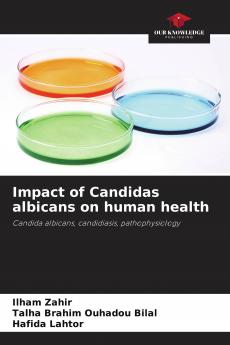
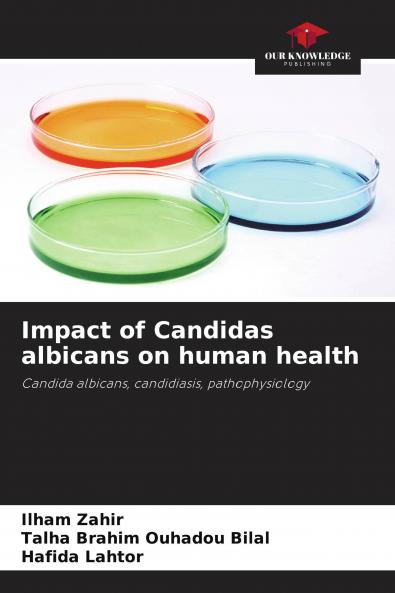
Candida albicans is a polymorphic yeast commensal of the oral cavity as well as the digestive and genital tract. However under certain conditions it becomes opportunistic leading to infections called candidiasis which can be severe or even fatal particularly in immunocompromised patients. Epidemiological data show that 82% of the world population is affected by C. albicans. Indeed this fungus expresses several pathogenicity factors. Therefore focusing on the pathophysiology of C. albicans eventually allows to understand the host-parasite relationship as well as the mechanisms and causes involved in the transition of yeast from commensal to pathogenic state. The goal is to further understand the factors that contribute to virulence in order to avoid infection or limit recurrence. This work also presents the clinical aspect of candidiasis their diagnostic methods as well as the treatments used and the mechanisms of resistance subsequent to the use of antifungal agents to finish with a set of preventive measures to be followed in order to limit the infection by C. albicans.
Piracy-free
Assured Quality
Secure Transactions
Delivery Options
Please enter pincode to check delivery time.
*COD & Shipping Charges may apply on certain items.
Review final details at checkout.
Details
ISBN 13
9786205856697
Publication Date
-30-03-2023
Pages
-60
Weight
-95 grams
Dimensions
-150x220x3.68 mm
