

English


Paperback
₹5753
₹7584
24.14% OFF
(All inclusive*)
Delivery Options
Please enter pincode to check delivery time.
*COD & Shipping Charges may apply on certain items.
Review final details at checkout.
Looking to place a bulk order? SUBMIT DETAILS

Piracy-free

Assured Quality

Secure Transactions
About The Book
Description
Author(s)
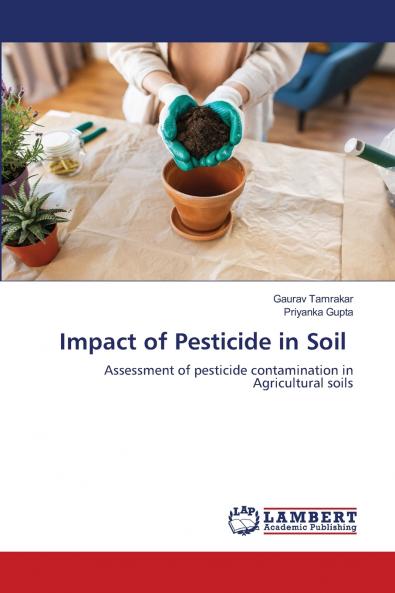
Many pesticides are used widely to protect plants from disease weeds and insect damage and usually come in attached with soil where they undergo a variety of transformations that provide a complex pattern of metabolites. This article reviews the most relevant analytical methods for determining pesticides and their transformation products in soils. We address some recent advances in sampling and sample-preparation technologies for soil analysis. We discuss and critically evaluate procedures such as liquid extraction methods (pressurized liquid extraction or microwave-assisted extraction) and solid-phase based methods (headspace solid- phase micro extraction solid-phase micro extraction or matrix-solid-phase dispersion). Analysis of pesticides is generally carried out by gas chromatography (GC) or liquid chromatography (LC) coupled to different detectors especially to mass spectrometers (MSs). However alternative and/or complementary methods using capillary electrophoresis (CE) biosensors and bioassays have emerged recently. We also consider the advantages and the disadvantages of the various methodologies.
Piracy-free
Assured Quality
Secure Transactions
Delivery Options
Please enter pincode to check delivery time.
*COD & Shipping Charges may apply on certain items.
Review final details at checkout.
Details
ISBN 13
9786206147145
Publication Date
-29-05-2025
Pages
-64
Weight
-101 grams
Dimensions
-152x229x3.89 mm
