






₹5757
₹6397
10% OFF
(All inclusive*)
Paperback
Delivery Options
Please enter pincode to check delivery time.
*COD & Shipping Charges may apply on certain items.
Review final details at checkout.
Looking to place a bulk order? SUBMIT DETAILS
Delivery Options
Please enter pincode to check delivery time.
*COD & Shipping Charges may apply on certain items.
Review final details at checkout.
About The Book
Description
Author
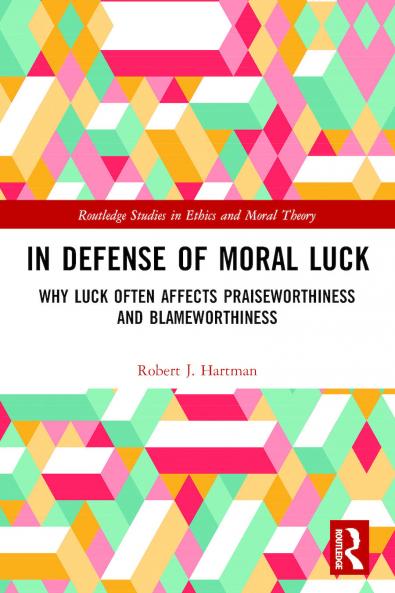
<p>The problem of moral luck is that there is a contradiction in our common sense ideas about moral responsibility. In one strand of our thinking we believe that a person can become more blameworthy by luck. For example two reckless drivers manage their vehicles in the same way and one but not the other kills a pedestrian. We blame the killer driver more than the merely reckless driver because we believe that the killer driver is more blameworthy. Nevertheless this idea contradicts another feature of our thinking captured in this moral principle: A person’s blameworthiness cannot be affected by that which is not within her control. Thus our ordinary thinking about moral responsibility implies that the drivers are and are not equally blameworthy.</p><p>In Defense of Moral Luck aims to make progress in resolving this contradiction. Hartman defends the claim that certain kinds of luck in results circumstance and character <i>can </i>partially determine the degree of a person’s blameworthiness. He also explains why there is a puzzle in our thinking about moral responsibility in the first place if luck often affects a person’s praiseworthiness and blameworthiness. Furthermore the book’s methodology provides a unique way to advance the moral luck debate with arguments from diverse areas in philosophy that do not bottom out in standard pro-moral luck intuitions.</p>

Piracy-free

Assured Quality

Secure Transactions

Fast Delivery

Sustainably Printed
Details
ISBN 13
9780367372415
Publication Date
-12-07-2019
Pages
-162
Weight
-229 grams
Dimensions
-151.89x229.11x8.92 mm
