

English


Paperback
₹5087
₹5873
13.38% OFF
(All inclusive*)
Delivery Options
Please enter pincode to check delivery time.
*COD & Shipping Charges may apply on certain items.
Review final details at checkout.
Looking to place a bulk order? SUBMIT DETAILS

Piracy-free

Assured Quality

Secure Transactions
About The Book
Description
Author
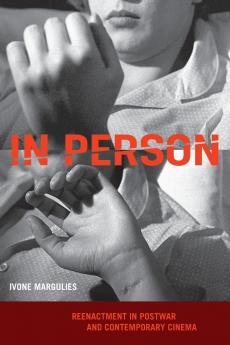
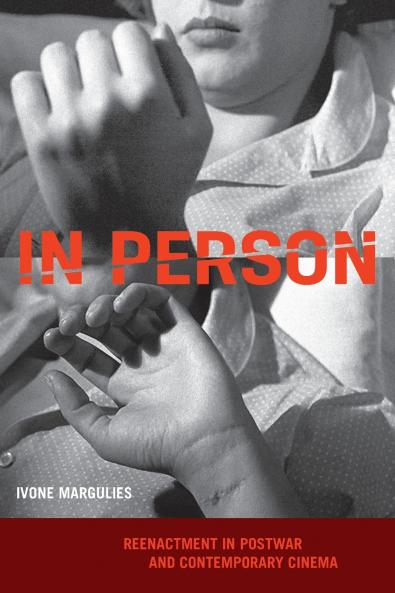
<em>In Person: Reenactment in Postwar and Contemporary Cinema</em> delineates a new performative genre based on replay and self-awareness. The book argues that in-person reenactment an actual person reenacting her past on camera departs radically from other modes of mimetic reconstruction. In Person theorizes this figure's protean temporality and revisionist capabilities and it considers its import in terms of social representativity and exemplarity. <p/>Close readings of select historicized examples define an alternate confessional-performative vein to understand the self-reflexive nature of postwar and post-holocaust testimonial cinemas. The book contextualizes Zavattini's proposal that in neorealism everyone should act his own story in a sort of anti-individualist public display (<em>Love in the City and We the Women</em>). It checks the convergence between verit&#65533; experiments a heightened self-critique in France and the reception of psychodrama in France (<em>Chronicle of a summer</em> and <em>The Human Pyramid</em>) in the late fifties. And through Bazin it reflects on the quandaries of celebrity biopics: how the circularity of the star's iconography is checked by her corporeal limits (<em>Sophia her Own Story</em> and the docudrama <em>Torero</em> ). <p/><em>In Person</em> traces a shift from the exemplary and transformative ethos of fifties reenactment towards the un-redemptive stance of contemporary reenactment films such as Lanzmann's <em>Shoah</em> Zhang Yuan's <em>Sons</em> Andrea Tonacci's <em>Hills of Chaos</em>. It defines continuities between verite testimony (<em>Chronicle</em> and <em>Moi un Noir</em>) and later para-juridical films such as the <em>Karski Report</em> and Rithy Panh's <em>S21 the Khmer Rouge Killing</em> <em>Machine</em> suggesting the power of co-presence and in person actualization for an ethics of viewership.<br>
Piracy-free
Assured Quality
Secure Transactions
Delivery Options
Please enter pincode to check delivery time.
*COD & Shipping Charges may apply on certain items.
Review final details at checkout.
Details
ISBN 13
9780190496838
Publication Date
-04-01-2019
Pages
-348
Weight
-495 grams
Dimensions
-156x234x18.39 mm
