


English


Paperback
₹6419
₹8469
24.21% OFF
(All inclusive*)
Delivery Options
Please enter pincode to check delivery time.
*COD & Shipping Charges may apply on certain items.
Review final details at checkout.
Looking to place a bulk order? SUBMIT DETAILS
Delivery Options
Please enter pincode to check delivery time.
*COD & Shipping Charges may apply on certain items.
Review final details at checkout.
About The Book
Description
Author(s)
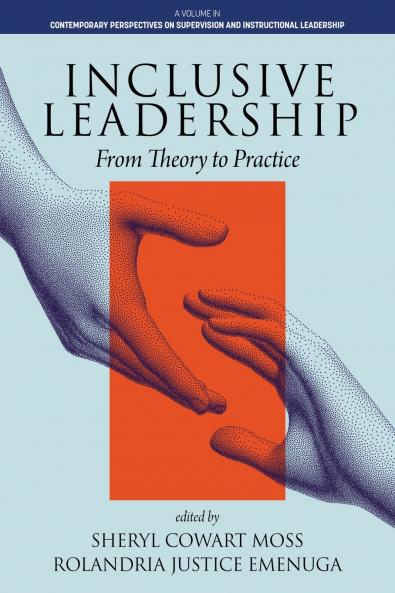
<p class=ql-align-justify><span style=color: rgba(0 0 0 1)>Inclusive leaders create strong cultures with systems to respond to unique needs and encourage hidden potential.&nbsp;Inclusive leaders think in terms of </span><em style=color: rgba(0 0 0 1)>each </em><span style=color: rgba(0 0 0 1)>rather than </span><em style=color: rgba(0 0 0 1)>all</em><span style=color: rgba(0 0 0 1)> and they strive to engage each child and adult. This perspective values individual cultural capital. (Cowart Moss 2020; DeMatthews 2018; McLeskey Waldron &amp; Redd 2019). Inclusive leadership requires district and school leaders&nbsp;to be intentional hypervigilant and to contextualize their work. These actions must be ongoing. They are not accomplishments rather they must be a way of leading and seeing the world. (Berry Cowart Moss &amp; Gore 2018; Mette 2019).&nbsp;</span></p><p class=ql-align-justify>&nbsp;</p><p class=ql-align-justify><span style=color: rgba(0 0 0 1)>Leaders can break down barriers or create obstacles. Ironically leaders may perceive themselves as promoting inclusion while still operating within areas of implicit bias (Arnold 2019; Theoharis &amp; Causton-Theoharis 2008; Willey &amp; Magee 2018). Barriers to inclusion may reside outside of a leader's direct control. They may be systemic or they may arise in unforeseen and unpredictable crises like the&nbsp;COVID-19 pandemic. While our schools continue to face enormous challenges from COVID-19 they also face stress from increasing awareness and reactions to systemic racism and political polarization. History shows collaboration and strong relationships can greatly impact responses to a crisis and the quality of rebuilding efforts after a crisis. (Stern Cetron &amp; Markel 2009). It is increasingly important for school leaders to cultivate inclusive approaches building&nbsp;repertoires of skills to meet the needs of the diverse marginalized and unsettled members of their school communities. Leaders must have theoretical and pedagogical tools for assessing their capacities and for reflecting on their progress. They must have access to resources and support for continued growth.&nbsp;</span></p><p class=ql-align-justify><span style=color: rgba(0 0 0 1)>&nbsp;</span></p><p class=ql-align-justify><span style=color: rgba(0 0 0 1)>The ideal of inclusion is synonymous with belonging and caring but ideals must be more than talking points. Inclusive leaders can parse out the subtleties that separate&nbsp;more abstract notions of justice and caring (Noddings 2015)&nbsp;from specific actions that result in inclusive cultures. These leaders bridge the gap between theory and practice. This volume </span><em style=color: rgba(0 0 0 1)>Inclusive Leadership: From Theory to Practice </em><span style=color: rgba(0 0 0 1)>seeks to provide a more nuanced view of what it means to be an inclusive leader as it explores current research practical applications and personal narratives.&nbsp;</span></p>

Piracy-free

Assured Quality

Secure Transactions

Fast Delivery

Sustainably Printed
Details
ISBN 13
9798887306681
Publication Date
-12-06-2024
Pages
-284
Weight
-407 grams
Dimensions
-156x234x15.14 mm
