

English


₹8085
(All inclusive*)
Paperback
Delivery Options
Please enter pincode to check delivery time.
*COD & Shipping Charges may apply on certain items.
Review final details at checkout.
Looking to place a bulk order? SUBMIT DETAILS
Delivery Options
Please enter pincode to check delivery time.
*COD & Shipping Charges may apply on certain items.
Review final details at checkout.
About The Book
Description
Author
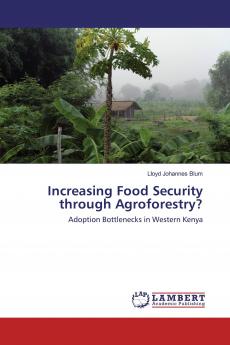
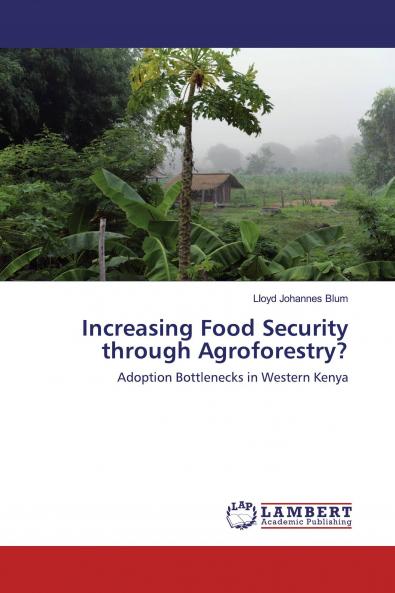
How to feed 9 billion people by 2050 without destroying the resource base upon which humankind depends? As a paradigm sustainable intensification leads us the way toward agriculture of the 21st century. In future agricultural production needs to be economically viable socially acceptable and cannot afford to undermine the ecological capacity of the landscape. Agroforestry is one production method among many that is proposed to enable hunger-stricken smallholders in developing countries to produce more with less and more with less again to achieve sustainable intensification. Agroforestry is recommended to be scaled-up as it has potential to maintain soil fertility and thereby reduce inorganic inputs that are often costly or inaccessible to smallholders. Agroforestry can also serve as a strategy to restore the ecological integrity of heavily degraded landscapes. It is capable to imitate basic ecological functions of forests such as soil cover moisture retention and nutrient cycling; offering structural diversity for wildlife generalists if well-designed. Yet which trees are grown not only depends on farmers' basic needs and preferences but also on national policies.

Piracy-free

Assured Quality

Secure Transactions

Fast Delivery

Sustainably Printed
Details
ISBN 13
9786200540744
Publication Date
-24-03-2020
Pages
-212
Weight
-280 grams
Dimensions
-150x220x11.49 mm
