

English


Hardback
₹9695
₹9864
1.71% OFF
(All inclusive*)
Delivery Options
Please enter pincode to check delivery time.
*COD & Shipping Charges may apply on certain items.
Review final details at checkout.
Looking to place a bulk order? SUBMIT DETAILS
Delivery Options
Please enter pincode to check delivery time.
*COD & Shipping Charges may apply on certain items.
Review final details at checkout.
About The Book
Description
Author
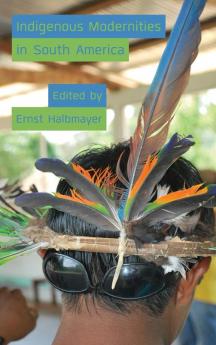
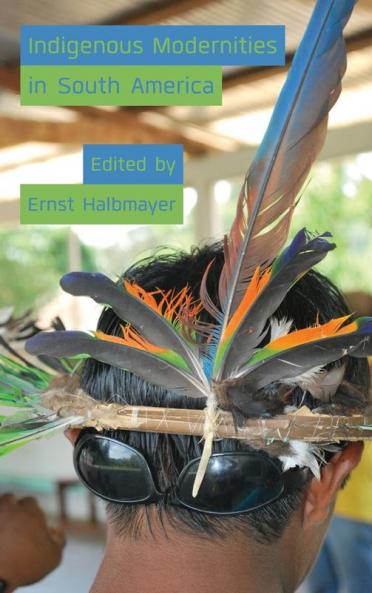
<p>Indigenous peoples have been cast as representing modernity&rsquo;s fading premodern Other. This volume starts from the opposite assumption namely that contemporary indigenous peoples are specifically modern societies profoundly shaped by their specific ways of dealing with making use of and transforming the contexts imposed by nation-states colonial systems and globalization. They do that from a position alternative to that of the modern West. The book aims to understand these processes and the resulting forms of indigenous modernities in Lowland South America through ethnographic case studies. It argues that there is more about indigenous modernities than the simple assertion that indigenous peoples are now modern too.</p><p>Indigenous groups are modern in multiple complex and alternative ways. As the contributions show this holds true for current forms of shamanism and indigenous Christian churches new meanings of traditional clothing as well as indigenous cosmologies that confront western concepts technology and welfare programmes.</p><p>The notion of indigenous modernities refers to a space beyond old modernist dichotomies. The paradox like the disturbing Otherness it brings to our attention is the result of a relation in which assumptions we take ontologically for granted are confronted by other realities. Looking at the creative ways indigenous peoples&rsquo; practices subvert such assumptions may result in substantial irritation and is a starting point for a renewed reflection on classical assumptions about modernities and indigenous ways of both being modern and exceeding modernity in the face of long-standing power inequalities and the imposition of logics of Western ontology.</p><blockquote><p>Indigeneous Modernities makes a major contribution to South American studies and is a &lsquo;must read&rsquo; by every ethnographer historian ethnohistorian and analyst of South American peoples. It&nbsp; challenges the very basis of so-called &lsquo;modernization theory&rsquo; and opens new doors to the understanding of indigenous agency and indigenous powers.&nbsp;&nbsp; &nbsp;<br />Norman E. Whitten Jr&nbsp; University of Illinois at Urbana-Champaign</p></blockquote><blockquote><p>Reading this book is one step (and an important one might it even be a giant leap?) to decolonizing the mind as the reader is confronted with an intermingling multitude of perspectives values worldviews and futures. This book is especially valuable for senior scholars and students alike for anybody seriously concerned with social processes of marginalization resistance adaptation appropriation and the creative and constructive shaping of social realities.&nbsp;&nbsp; &nbsp;<br />Bernd Brabec de Mori University of Music and Performing Arts Graz</p></blockquote><p>Ernst Halbmayer is Professor of Social and Cultural Anthropology at the Institute for Comparative Cultural Research University of Marburg Germany.</p>

Piracy-free

Assured Quality

Secure Transactions

Fast Delivery

Sustainably Printed
Details
ISBN 13
9781912385010
Publication Date
-10-08-2018
Pages
-246
Weight
-447 grams
Dimensions
-156x234x15.88 mm
