

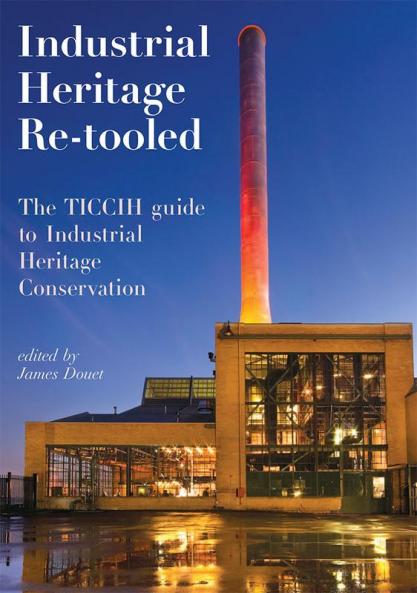
This volume comprises the authoritative work from the International Committee for the Conservation of the Industrial Heritage – the international group dedicated to industrial archaeology and heritage – detailing the latest approaches to the conservation of the global industrial heritage. With contributions from over thirty specialists in archaeology and industrial heritage, Industrial Heritage Re-tooled establishes the first set of comprehensive best practices for the management, conservation, and interpretation of historical industrial sites. This book:-defines the meaning and scope of industrial heritage within an international context;-addresses the identification and conservation of the material remains of industry;-covers subjects as diverse as documentation and recording of industrial heritage, industrial tourism, and the teaching of industrial heritage in museums, schools, and universities. <p>Introduction, James Douet Part I: Values and meanings Chapter 1: Why preserve the industrial heritage?, Neil Cossons Chapter 2: What does the Industrial Revolution signify?, Helmuth Albrecht Chapter 3: Industrial Archaeology: a discipline?, Barrie Trinder Chapter 4: The heritage of the industrial society, Louis Bergeron Part II: Understanding the evidence Chapter 5: Industrial archaeology, Patrick Martin Chapter 6: Identifying industrial landscapes, Iain Stuart Chapter 7: Recording and documentation, Miles Oglethorpe and Miriam McDonald Chapter 8: Process recording, Gustav Rossnes Chapter 9: Industrial archives and company records, Belem Oviedo Gámez Chapter 10: Photography and image sources, Jan af Geijerstam Part III: Realising the potential Chapter 11: Choosing what to preserve, Paul Smith Chapter 12: Legal protection, Keith Falconer Chapter 13: Urban regeneration and planning, Massimo Preite Chapter 14: Adaptive re-use, Benjamin Fragner Chapter 15: Financial and fiscal incentives, Bode Morin Chapter 16: Heritage at risk surveys, Jaime Migone Chapter 17: Conservation plans: Helen Lardner Chapter 18: Adaptive re-use and embodied energy, Mark Watson Chapter 19: Post-industrial landscapes, Norbert Tempel Chapter 20: Industrial ruins, Masaaki Okada Chapter 21: Conservation and community consciousness, Hsiao-Wei Lin Chapter 22: Industrial heritage and the World Heritage Convention, Peter Stott Chapter 23: World Heritage, concepts and criteria, Michel Cotte Chapter 24: Thematic World Heritage Studies, Stephen Hughes Part IV: Sharing and enjoying Chapter 25: Industrial museums, Massimo Negri Chapter 26: Care of industrial and technical collections, Johannes Großewinkelmann Chapter 27: Conserving industrial artefacts, Eusebi Casanelles and James Douet Chapter 28: Industrial heritage tourism, Wolfgang Ebert Part V: Teaching and learning Chapter 29: Teaching in schools, Gràcia Dorel-Ferré Chapter 30: University training, Györgyi Németh Chapter 31: Distance and on-line learning, Tuija Mikkonen Part VI: TICCIH Chapter 32: The work of TICCIH, Stuart B. Smith Chapter 33: TICCIH’s Charter for Industrial Heritage, Eusebi Casanelles Appendix: The Nizhny Tagil Charter for the Industrial Heritage Index</p>