


English



Paperback
₹1404
(All inclusive*)
Delivery Options
Please enter pincode to check delivery time.
*COD & Shipping Charges may apply on certain items.
Review final details at checkout.
Looking to place a bulk order? SUBMIT DETAILS

Piracy-free

Assured Quality

Secure Transactions
About The Book
Description
Author
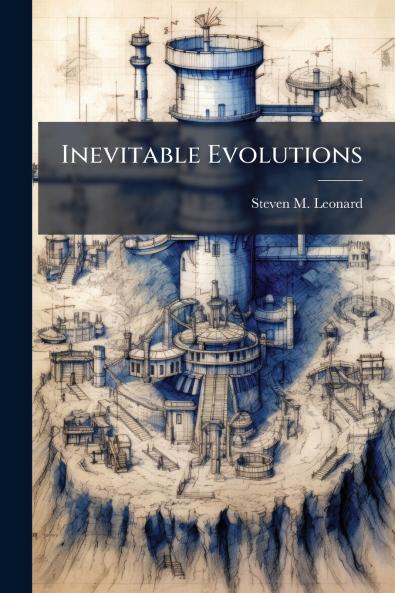
<p>The Revolution in Military Affairs (RMA) remains one of the most publicized yet least understood concepts among contemporary defense analysts. Too often professional academic evaluation of military revolution is force-centric neglecting the inherent association with the social political and economic dimensions within which all warfare is conducted. Historian Michael Roberts who first postulated the presence of a revolution in military affairs in early modern Europe envisioned a broad theoretical construct that encompassed these dimensions within a framework remarkably similar to Carl von Clausewitz's paradoxical trinity conjoining the military with the socio-political facets of war. Nevertheless the modern RMA debate largely neglects this model in the pursuit of a panacea for the future. Returning to the fundamental traditions that once defined the RMA debate this monograph introduces a paradigm that melds the essence of Roberts' holistic approach with the theory of punctuated equilibrium a biological model for evolutionary development hypothesized by Niles Eldredge and Steven Gould in 1972. Their model which countered the very soul of Darwinian evolution proved both accurate and versatile and was quickly adapted in the fields of finance business and organizational theory. In the pages that follow the author redefines the history of military revolutions within the context of Punctuated Revolutions in Military Affairs in which military revolution occurs in bursts of rapid change punctuated by relatively long periods of equilibrium or international symmetry. The utility of this new paradigm is twofold: first punctuated equilibrium presents an analytical model for the examination of historical military revolutions consistent with Michael Roberts' original thesis; second punctuated equilibrium defines history within the context of patterns of change and is therefore predictive in nature. Ultimately this monograph posits the present state of mi</p><p>This work has been selected by scholars as being culturally important and is part of the knowledge base of civilization as we know it. This work was reproduced from the original artifact and remains as true to the original work as possible. Therefore you will see the original copyright references library stamps (as most of these works have been housed in our most important libraries around the world) and other notations in the work.</p><p>This work is in the public domain in the United States of America and possibly other nations. Within the United States you may freely copy and distribute this work as no entity (individual or corporate) has a copyright on the body of the work.</p><p>As a reproduction of a historical artifact this work may contain missing or blurred pages poor pictures errant marks etc. Scholars believe and we concur that this work is important enough to be preserved reproduced and made generally available to the public. We appreciate your support of the preservation process and thank you for being an important part of keeping this knowledge alive and relevant.</p>
Piracy-free
Assured Quality
Secure Transactions
Delivery Options
Please enter pincode to check delivery time.
*COD & Shipping Charges may apply on certain items.
Review final details at checkout.
Details
ISBN 13
9781288257546
Publication Date
-09-11-2012
Pages
-60
Weight
-100 grams
Dimensions
-156x234x3.16 mm
