


This Book is Out of Stock!
English


Paperback
₹16230
(All inclusive*)
Delivery Options
*COD & Shipping Charges may apply on certain items.
Review final details at checkout.
Looking to place a bulk order? SUBMIT DETAILS

Piracy-free

Assured Quality

Secure Transactions
About The Book
Description
Author
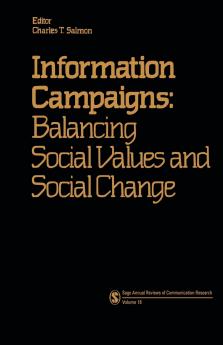
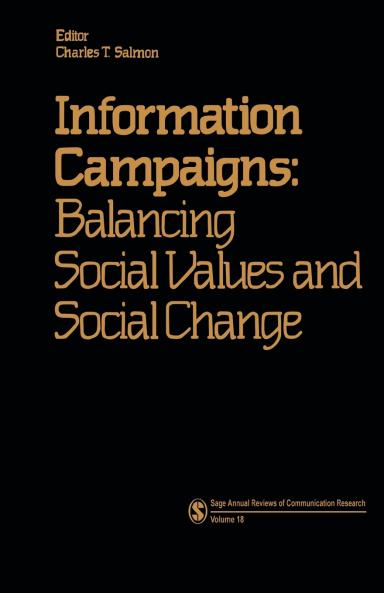
Today more than ever before governments industry and special interest groups are employing information campaigns to effect social change. In ground-breaking fashion Information Campaigns explores theory of campaigns as well as theory for campaigns addressing the social context of public information campaigns and social marketing efforts. Using an interdisciplinary approach Salmon and a distinguished team of contributors develop the theoretical framework of social change to discuss the melding of marketing and strategic communication traditions. Part I reviews the social context in which campaigns are designed implemented and analyzed illustrating a broad range of social concerns campaigns address. The second section analyzes tactical concerns pertaining to underlying components of campaigns namely audience research planning organization and implementation and evaluation. Students and professionals in the fields of communication political science marketing and public health will benefit from the refreshing approach and provocative analyses in this volume. This is a terrific book. It presents a unique integration of value and ideological perspectives with the empirical research on information campaigns. The book offers a thorough and readable analysis of the diverse literature in this area. --Richard M. Perloff Cleveland State University The [first] section as a whole is particularly successful in providing a context for the study of campaigns within the ongoing processes of social change. . . . The second section of the book offers some interesting treatments of several . . . components of the campaign process. . . . This collection goes a long way toward establishing a new framework within which to study campaigns. . . . It lays out some clear directions and challenges for future research. --Journal of Communication Salmon′s Information Campaigns is a welcome addition to the literature. . . . [This book] enlarges our knowledge of the processes involved in media-centered social change and how social systems . . . act to influence the attitudes perceptions and behaviors of different publics. . . . Salmon′s book is a refreshing departure from the approach generally taken in the information campaign literature. Having carefully assembled authors from a wide range of disciplines and representing divergent theoretical perspectives and research orientations Salmon provides a balanced presentation of the values of intended receivers and sponsors of planned social change. He gives as much importance to the values of campaign sponsors as he does to the values of receivers of ′social good.′ . . . Practitioners researchers and students will find the book useful . . . particularly useful for graduate-level courses in political communication development communication health communication strategic communication and social marketing. --Journal of Broadcasting and Electronic Media Unlike many edited volumes quality is consistent across chapters. --Journalism Quarterly
Piracy-free
Assured Quality
Secure Transactions
*COD & Shipping Charges may apply on certain items.
Review final details at checkout.
₹16230
Out Of Stock
All inclusive*
Details
ISBN 13
9780803932197
Publication Date
-01-11-1989
Pages
-316
Weight
-374 grams
Dimensions
-140x216x16.79 mm
