


This Book is Out of Stock!
English



Hardback
₹7049
₹8075
12.71% OFF
(All inclusive*)
Delivery Options
*COD & Shipping Charges may apply on certain items.
Review final details at checkout.
Looking to place a bulk order? SUBMIT DETAILS

Piracy-free

Assured Quality

Secure Transactions
About The Book
Description
Author
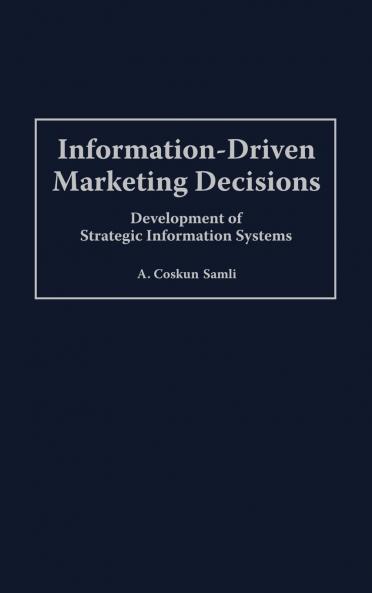
Data have almost no value in and for themselves. What''s important is how they are used to create the information one needs to make informed decisions and this is particularly true in making marketing decisions. Thus Samli''s new book dwells on the art and science of information generation and on how to convert it to practical knowledge. Without information and knowledge says Samli the firm faces great risk in the marketplace and its survival probabilities in the long run are very low. Samli explains first the various data generating procedures with special emphasis on data analysis and second the procedures for creating information out of data all in a clear systematic presentation that marketing managers will understand and benefit from immediately. Their MIS colleagues whose goal should be to make data and information decision-maker friendly will also benefit. A unique valuable book for both.The problem is not information overload as some contend says Samli but data overload. Data have almost no value in and for themselves. What''s important is how data are used to create the information marketers need in order to make knowledgeable decisions. Thus Samli''s newest book dwells on the art and science of information generation and on how to convert it to practical knowledge. Without information and knowledge and another essential ingredient wisdom the firm faces great risk in the marketplace and its survival probabilities in the long run are very low says the author.Samli starts by presenting the key elements that contribute to an information gap in the use of data for marketing decisions. He describes the evolution of information in decision making the distinction between data and information and the reasons why data gathering and processing have become so sophisticated and difficult to use. Samli goes on to discuss data collecting techniques the dimensions and uses of internal data and their parameters and identifies the best but most underrated data gathering method: observation. Surveys experimentation and research are covered next including attitude and motivation research with a careful analysis of how the research operation as well as its products should be managed. He goes on to explain how information is elicited from data and how it should be used; then the various control mechanisms for information systems overall and ends with his own agenda for the improvement of the entire information-driven marketing decision process. A clear systematic presentation that marketing managers and their MIS colleagues (who appreciate the need to make data and information decision-maker friendly) will find valuable and immediately beneficial.
Piracy-free
Assured Quality
Secure Transactions
*COD & Shipping Charges may apply on certain items.
Review final details at checkout.
₹7049
₹8075
12% OFF
Hardback
Out Of Stock
All inclusive*
Details
ISBN 13
9780899309767
Publication Date
-28-02-1996
Pages
-216
Weight
-387 grams
Dimensions
-152x229x15.88 mm
