

English


Hardback
₹7402
₹9623
23.08% OFF
(All inclusive*)
Delivery Options
Please enter pincode to check delivery time.
*COD & Shipping Charges may apply on certain items.
Review final details at checkout.
Looking to place a bulk order? SUBMIT DETAILS

Piracy-free

Assured Quality

Secure Transactions
About The Book
Description
Author(s)
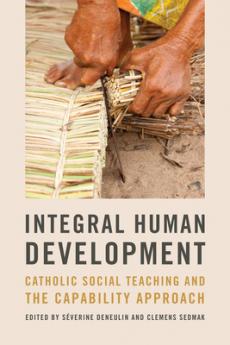
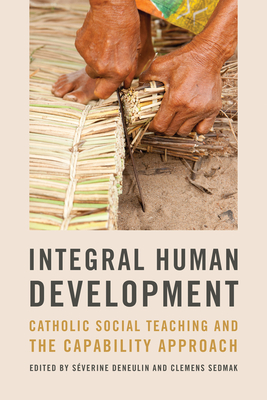
<p><b>This volume brings into conversation two major moral traditions in the social sciences and humanities that offer common areas for understanding interpreting and transforming the world.</b></p><p>Over the last decade moral theologians who work on issues of poverty social justice human rights and political institutions have been finding inspiration in the capability approach (CA). Conversely social scientists who have been working on issues of poverty and social justice from a CA perspective have been finding elements in the Catholic social tradition (CST) to overcome some of the limitations of the CA such as its vagueness regarding what counts as a valuable human life and its strong individual focus. <i>Integral Human Development</i> brings together for the first time social scientists and theologians in dialogue over their respective uses of CST and CA. The contributors discuss what their mutual grounds are where they diverge and where common areas of collaboration and transformative action can be found. The contributors offer a critical analysis of CA from the perspective of theology. They also provide an original account of CST. The book offers a broader historical biblical social economic political and ecological understanding of CST than that which is currently available in the CST literature. The book will interest students and practitioners in global affairs development studies or the social sciences who seek to better understand the Catholic tradition and its social teachings and what they can offer to address current socio-environmental challenges.</p><p>Contributors: Séverine Deneulin Clemens Sedmak Amy Daughton Dana Bates Lori Keleher Joshua Schulz Katie Dunne Cathriona Russell Meghan J. Clark Ilaria Schnyder von Wartensee Elizabeth Hlabse Guillermo Otano Jiménez James P. Bailey Helmut P. Gaisbauer and Augusto Zampini-Davies.</p>
Piracy-free
Assured Quality
Secure Transactions
Delivery Options
Please enter pincode to check delivery time.
*COD & Shipping Charges may apply on certain items.
Review final details at checkout.
Details
ISBN 13
9780268205706
Publication Date
-15-08-2023
Pages
-400
Weight
-628 grams
Dimensions
-152x229x25.4 mm
