




This Book is Out of Stock!
English





Hardback
₹15546
₹18960
18.01% OFF
(All inclusive*)
Delivery Options
*COD & Shipping Charges may apply on certain items.
Review final details at checkout.
Looking to place a bulk order? SUBMIT DETAILS
*COD & Shipping Charges may apply on certain items.
Review final details at checkout.
₹15546
₹18960
18% OFF
Hardback
Out Of Stock
All inclusive*
About The Book
Description
Author
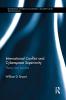
<p>This book examines cyberspace superiority in nation-state conflict from both a theoretical and a practical perspective. </p><p>This volume analyses superiority concepts from the domains of land maritime and air to build a model that can be applied to cyberspace. Eight different cyberspace conflicts between nation states are examined and the resulting analysis is combined with theoretical concepts to present the reader with a conclusion. Case studies include the conflict between Russia and Estonia (2007) North Korea and the US and South Korea (2009) and Saudi Arabia and Iran in the Aramco attack (2012). The book uses these case studies to examine cyberspace superiority as an analytical framework to understand conflict in this domain between nation-states. Furthermore the book makes the important distinction between local and universal domain superiority and presents a unique model to relate this superiority in all domains as well as a more detailed model of local superiority in cyberspace. Through examining the eight case studies the book develops a rigorous system to measure the amount of cyberspace superiority achieved by a combatant in a conflict and seeks to reveal if cyberspace superiority proves to be a significant advantage for military operations at the tactical operational and strategic levels.</p><p>This book will be of much interest to students of cyber-conflict strategic studies national security foreign policy and IR in general.</p>

Piracy-free

Assured Quality

Secure Transactions

Fast Delivery

Sustainably Printed
Details
ISBN 13
9781138918917
Publication Date
-04-08-2015
Pages
-250
Weight
-453 grams
Dimensions
-156x234x14.84 mm
