

English



₹18566
₹23806
22.01% OFF
(All inclusive*)
Hardback
Delivery Options
Please enter pincode to check delivery time.
*COD & Shipping Charges may apply on certain items.
Review final details at checkout.
Looking to place a bulk order? SUBMIT DETAILS
Delivery Options
Please enter pincode to check delivery time.
*COD & Shipping Charges may apply on certain items.
Review final details at checkout.
About The Book
Description
Author(s)
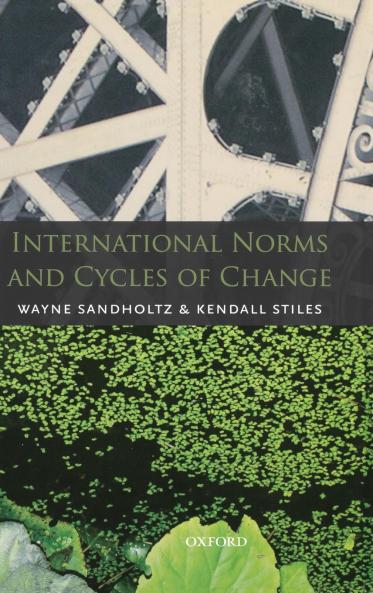
International lawyers and international relations scholars recognize that international norms change over time. Practices that were once permissible and even normal - like slavery conquest and wartime plundering - are now prohibited by international rules. Yet though we acknowledge norm change we are just beginning to understand how and why international rules develop in the ways that they do. Wayne Sandholtz and Kendall Stiles sketch the primary theoretical perspectives on international norm change the legalization and transnational activist approaches and argue that both are limited by their focus on international rules as outcomes. The authors then present their cycle theory in which norm change is continual a product of the constant interplay among rules behavior and disputes. Cycles of International Norm Change is the natural follow-on to Prohibiting Plunder testing the cycle theory against ten empirical cases. The cases range from piracy and conquest to terrorism slavery genocide humanitarian intervention and the right to democracy. The key finding is that across long stretches of time and diverse substantive areas norm change occurs via the cycle dynamic. Cycles of International Norm Change further advances the authors'' theoretical approach by arguing that international norms have been shaped by two main currents: sovereignty rules and liberal rules. Sovereignty rules are the necessary norms for establishing an international society of sovereign states and deal with the rights prerogatives and duties of states. Liberal rules are norms that emerged out of the Enlightenment and enshrine the basic value dignity and inherent rights of each person. Sandholtz and Stiles include five cases of sovereignty rules and five of liberal rules in order to reveal the broad cyclic pattern of international change in these two categories of rules.

Piracy-free

Assured Quality

Secure Transactions

Fast Delivery

Sustainably Printed
Details
ISBN 13
9780195380088
Publication Date
-01-12-2008
Pages
-428
Weight
-697 grams
Dimensions
-156x234x26.99 mm
