

English


Paperback
₹7173
₹8420
14.81% OFF
(All inclusive*)
Delivery Options
Please enter pincode to check delivery time.
*COD & Shipping Charges may apply on certain items.
Review final details at checkout.
Looking to place a bulk order? SUBMIT DETAILS

Piracy-free

Assured Quality

Secure Transactions
About The Book
Description
Author(s)
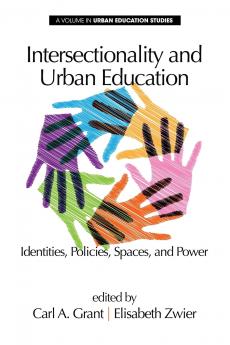
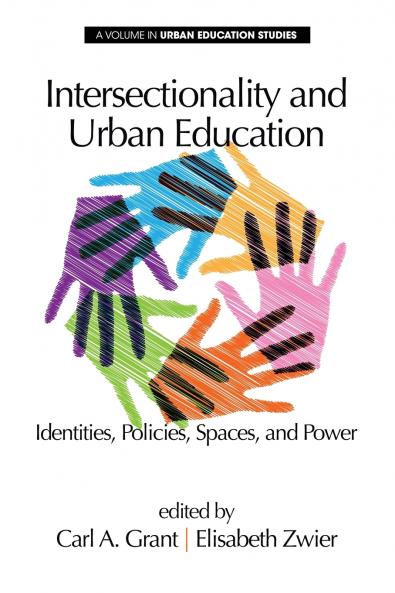
A volume in Urban Education Studies SeriesSeries Editors Nicholas D. Hartlep Illinois State UniversityThandeka K. Chapman University of California San Diego and Kenny Varner Louisiana State UniversityIn urban education urban is a floating signifier that is imbued with meaning positive or negative by its users. Urbancan be used to refer to both the geographical context of a city and a sense of less than most often in relation to race and/or socioeconomic status (Watson 2011). For Noblit and Pink (2007) Urban rather is a generalization as much aboutgeography as it is about the idea that urban centers have problems: problems of too many people too much poverty toomuch crime and violence and ultimately too little hope (p. xv). Recently urban education scholars such as Anyon(2005) Pink and Noblit (2007) Blanchett Klinger and Harry (2009) and Lipman (2013) have elucidated the socialconstruction of oppression and privilege for urban students teachers schools families and communities usingintersectionality theories. Building on their work we see the need for an edited collection that would look across the different realms of urban education-theorizingidentity markers in urban education education in urban schools and communities thinking intersectionally in teacher education & higher education educational policies& urban spaces-seeking to better understand each topic using an intersectional lens. Such a collection might serve to conceptually frame or provide methodologicaltools or act as a reference point for scholars and educators who are trying to address urban educational issues in light of identities and power. Secondly we argue thateducation questions and/or problems beg to be conceptualized and analyzed through more than one identity axis. Policies and practices that do not take into accounturban students' intertwining identity markers risk reproducing patterns of privilege and oppression perpetuating stereotypes and failing at the task we care most deeplyabout: supporting all students' learning across a holistic range of academic personal and justice-oriented outcomes.Can educational policies and practices address the social justice issues faced in urban schools and communities today? We argue that doing intersectional research andimplementing educational policies and practices guided by these frameworks can help improve the fit. Particular attention needs to be paid to intersectionality as a lensfor educational theory policy and practice. As urban educators we would be wise to consider the intertwining of these identity axes in order to better analyze educationalissues and engage in teaching learning research and policymaking that are better-tuned to the needs of diversestudents families and communities.
Piracy-free
Assured Quality
Secure Transactions
Delivery Options
Please enter pincode to check delivery time.
*COD & Shipping Charges may apply on certain items.
Review final details at checkout.
Details
ISBN 13
9781623967321
Publication Date
-06-08-2014
Pages
-332
Weight
-473 grams
Dimensions
-156x234x17.6 mm
