

English


Paperback
₹5782
(All inclusive*)
Delivery Options
Please enter pincode to check delivery time.
*COD & Shipping Charges may apply on certain items.
Review final details at checkout.
Looking to place a bulk order? SUBMIT DETAILS

Piracy-free

Assured Quality

Secure Transactions
About The Book
Description
Author
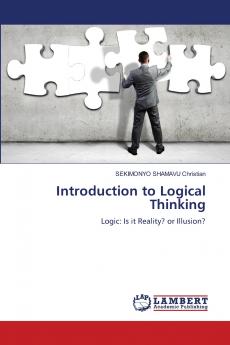
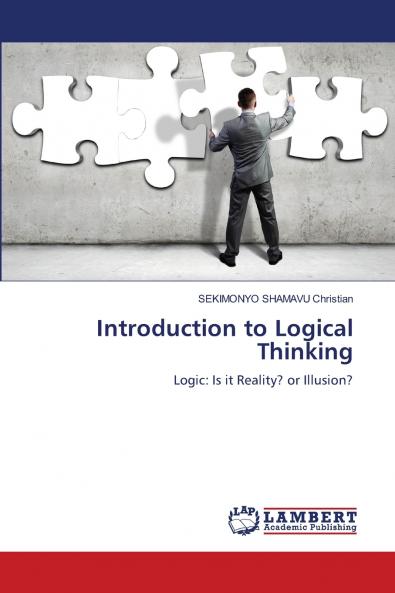
Logical thinking or formal logic is essential in philosophy and cognitive science for analyzing and understanding arguments. It is effective in dealing with formal problems and abstract systems because of its rigor and precision but this same rigor can be limiting in complex real-world situations. Everyday arguments are not always as clear-cut as formal syllogisms which can lead to conclusions that are logically valid but irrelevant in reality. Another criticism of logical thinking is its abstraction which often neglects the semantic and contextual content of propositions. An argument can be logically valid but absurd in terms of meaning. Formal logic is criticized for its inability to address the emotional and irrational aspects of human experience such as emotions intuitions and cognitive biases which play a crucial role in decision-making. Ignoring these aspects can lead to an incomplete understanding of human mental processes. In sum while logical thinking is a valuable tool its limitations in terms of abstraction rigidity reliance on questionable premises and lack of consideration of cultural and emotional contexts suggest.
Piracy-free
Assured Quality
Secure Transactions
Delivery Options
Please enter pincode to check delivery time.
*COD & Shipping Charges may apply on certain items.
Review final details at checkout.
Details
ISBN 13
9786208431006
Publication Date
-18-02-2025
Pages
-96
Weight
-142 grams
Dimensions
-150x220x5.53 mm
