

Eng


₹9314
₹13179
29.33% OFF
(All inclusive*)
Hardback
Delivery Options
Please enter pincode to check delivery time.
*COD & Shipping Charges may apply on certain items.
Review final details at checkout.
Looking to place a bulk order? SUBMIT DETAILS
Delivery Options
Please enter pincode to check delivery time.
*COD & Shipping Charges may apply on certain items.
Review final details at checkout.
About The Book
Description
Author
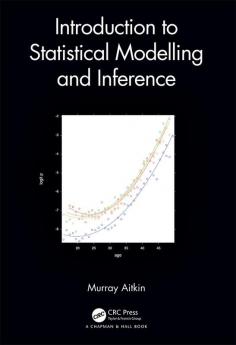
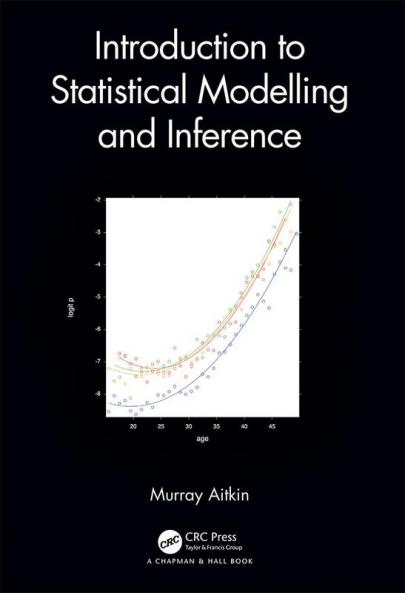
<p>The complexity of large-scale data sets (“Big Data”) has stimulated the development of advanced <br>computational methods for analysing them. There are two different kinds of methods to aid this. The <br>model-based method uses probability models and likelihood and Bayesian theory while the model-free <br>method does not require a probability model likelihood or Bayesian theory. These two approaches <br>are based on different philosophical principles of probability theory espoused by the famous <br>statisticians Ronald Fisher and Jerzy Neyman.<br>Introduction to Statistical Modelling and Inference covers simple experimental and survey designs <br>and probability models up to and including generalised linear (regression) models and some <br>extensions of these including finite mixtures. A wide range of examples from different application <br>fields are also discussed and analysed. No special software is used beyond that needed for maximum <br>likelihood analysis of generalised linear models. Students are expected to have a basic <br>mathematical background in algebra coordinate geometry and calculus.<br>Features<br>• Probability models are developed from the shape of the sample empirical cumulative distribution <br>function (cdf) or a transformation of it.<br>• Bounds for the value of the population cumulative distribution function are obtained from the <br>Beta distribution at each point of the empirical cdf.<br>• Bayes’s theorem is developed from the properties of the screening test for a rare condition.<br>• The multinomial distribution provides an always-true model for any randomly sampled data.<br>• The model-free bootstrap method for finding the precision of a sample estimate has a model-based <br>parallel – the Bayesian bootstrap – based on the always-true multinomial distribution.<br>• The Bayesian posterior distributions of model parameters can be obtained from the maximum <br>likelihood analysis of the model.</p><p>This book is aimed at students in a wide range of disciplines including Data Science. The book is <br>based on the model-based theory used widely by scientists in many fields and compares it in less <br>detail with the model-free theory popular in computer science machine learning and official <br>survey analysis. The development of the model-based theory is accelerated by recent developments<br>in Bayesian analysis.</p>

Piracy-free

Assured Quality

Secure Transactions

Fast Delivery

Sustainably Printed
Details
ISBN 13
9781032105710
Publication Date
-30-09-2022
Pages
-390
Weight
-931 grams
Dimensions
-178x254x22.1825 mm
