



This Book is Out of Stock!
English



₹23155
(All inclusive*)
Hardback
Delivery Options
*COD & Shipping Charges may apply on certain items.
Review final details at checkout.
Looking to place a bulk order? SUBMIT DETAILS
*COD & Shipping Charges may apply on certain items.
Review final details at checkout.
₹23155
Out Of Stock
All inclusive*
About The Book
Description
Author
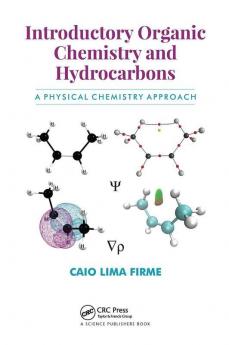
<p>A novel proposal for teaching organic chemistry based on a broader and simplified use of quantum chemistry theories and notions of some statistical thermodynamic concepts aiming to enrich the learning process of the organic molecular properties and organic reactions. A detailed physical chemistry approach to teach organic chemistry for undergraduate students is the main aim of this book. A secondary objective is to familiarize undergraduate students with computational chemistry since most of illustrations of optimized geometries (plus some topological graphs) and information is from quantum chemistry outputs which will also enable students to obtain a deeper understanding of organic chemistry.</p> <p><strong>TABLE OF CONTENTS</strong></p><p>Notions of Quantum Mechanics and Wave Function<br>Molecular Orbital, Valence Bond, Atoms in Molecules and Non-Covalent Interaction Theories and Their Applications in Organic Chemistry<br>Quantum Mechanics and Electrostatic Force in Molecules<br>Notions of Thermodynamics, Molecular Energy and Use of Theoretical Thermodynamic Data <br>Quantum Mechanics and Periodic Table<br>Quantum Mechanical Resonance, Chemical Bond and Hybridization<br>Electron Delocalization, Resonance Types and Resonance Theory<br>Quantum Chemistry of Potential Energy Surface (geometric parameters, energy derivatives, optimized geometries and transition states)<br>Representations of Organic Molecules, Atomic Charge and Formal Charge<br>Kinetics and Mechanism: Notions and The Quantum Statistical Influence<br>Intermolecular Interactions<br>Carbocations<br>Isomerism<br>Alkanes (nomenclature, properties and reactions)<br>Cycloalkanes, Bicyclic and Caged Hydrocarbons<br>Alkenes (nomenclature and properties)<br>Alkenes (reactions)<br>Alkynes (properties and reaction)<br>Aromaticity and Aromatic Compounds<br>Substituent Groups and Electrophilic Aromatic Substitution<br>Appendix</p>

Piracy-free

Assured Quality

Secure Transactions

Fast Delivery

Sustainably Printed
Details
ISBN 13
9780815383574
Publication Date
-27-08-2019
Pages
-458
Weight
-738 grams
Dimensions
-156x234x25.53 mm
