

English


₹5232
₹5519
5.2% OFF
(All inclusive*)
Paperback
Delivery Options
Please enter pincode to check delivery time.
*COD & Shipping Charges may apply on certain items.
Review final details at checkout.
Looking to place a bulk order? SUBMIT DETAILS
Delivery Options
Please enter pincode to check delivery time.
*COD & Shipping Charges may apply on certain items.
Review final details at checkout.
About The Book
Description
Author
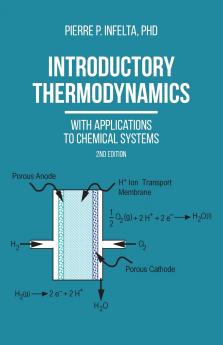
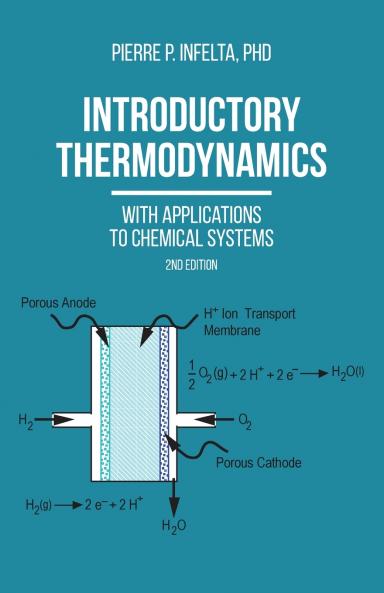
<p><strong>This revised and updated edition provides clear basic knowledge of thermodynamics fundamentals as well as their use and applications to chemical systems. </strong>Included in the text are some 100 examples combining theoretical and numerical applications to illustrate the way in which the formal results can be applied. Color figures and illustrations serve to ease comprehension of the systems investigated as well as the results obtained. In the text some of the most important statements and equations are highlighted. Undergraduate students will find the content easily accessible while the coverage is thorough. We investigate various systems those containing only one chemical species (phase equilibria for example) systems containing mixtures of non-reacting species and systems where chemical reactions occur. We provide examples on how to obtain all the possible reactions in a system when knowing the species that are either present or generated by all of the possible reactions. The thermodynamics of gases are extensively described first for systems of ideal gases pure or mixtures then the tools needed to deal with real gases are developed. Systems with multiple phases are also described. The energetics of chemical reactions is investigated. This knowledge can be used to find out how to store energy or convert chemical energy to electricity using batteries or fuel cells.</p><p></p><p>Ideal and real solutions are presented using available data from existing thermodynamic tables to fully understand the chemical behavior of solutions. The various composition scales are presented. Electrolytic solutions are also dealt with at the end of chapter 12.</p><p></p><p><strong>REVIEWS and WORDS OF PRAISE</strong></p><p></p><p> <em>Dr. Infelta has prepared a compact Introductory Thermodynamics book which will serve well for mature students who need a command of this important field. Undergraduate students ... will find the presentation logical the examples thoughtful and the coverage thorough. Students and professionals for whom memory or mastery of previous thermodynamics courses have dimmed will find in addition to the above virtues careful derivation of the properties of non-ideal systems and emphasis on when to use these results instead of ideal system results treatment of multireaction equilibria and (a personal favorite) a succinct elucidation of that odd proposition of thermodynamics Le Chatelier's Principle. These students will value this small volume packed with the power of classical thermodynamics.</em></p><p> --Lynn Melton Professor of Chemistry University of Texas Dallas. </p>

Piracy-free

Assured Quality

Secure Transactions

Fast Delivery

Sustainably Printed
Details
ISBN 13
9781599427256
Publication Date
-17-11-2025
Pages
-208
Weight
-251 grams
Dimensions
-140x216x11.18 mm
