

English


Paperback
₹2640
(All inclusive*)
Delivery Options
Please enter pincode to check delivery time.
*COD & Shipping Charges may apply on certain items.
Review final details at checkout.
Looking to place a bulk order? SUBMIT DETAILS
Delivery Options
Please enter pincode to check delivery time.
*COD & Shipping Charges may apply on certain items.
Review final details at checkout.
About The Book
Description
Author
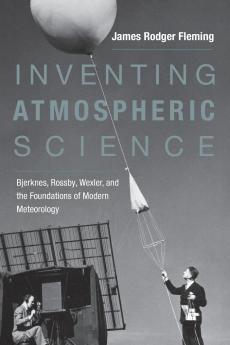
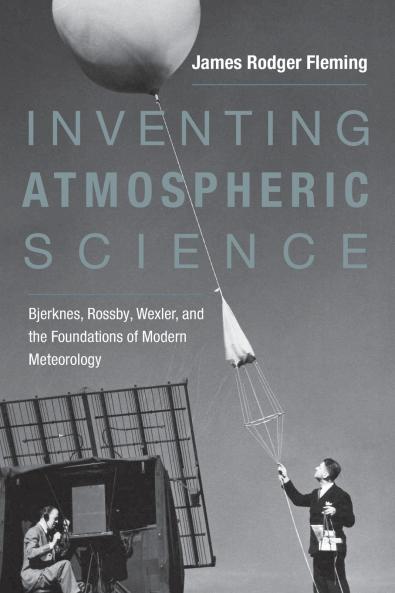
<b>How scientists used transformative new technologies to understand the complexities of weather and the atmosphere told through the intertwined careers of three key figures.</b><p>The goal of meteorology is to portray everything atmospheric everywhere always declared John Bellamy and Harry Wexler in 1960 soon after the successful launch of TIROS 1 the first weather satellite. Throughout the twentieth century meteorological researchers have had global ambitions incorporating technological advances into their scientific study as they worked to link theory with practice. Wireless telegraphy radio aviation nuclear tracers rockets digital computers and Earth-orbiting satellites opened up entirely new research horizons for meteorologists. In this book James Fleming charts the emergence of the interdisciplinary field of atmospheric science through the lives and careers of three key figures: Vilhelm Bjerknes (1862-1951) Carl-Gustaf Rossby (1898-1957) and Harry Wexler (1911-1962).</p><p>In the early twentieth century Bjerknes worked to put meteorology on solid observational and theoretical foundations. His younger colleague the innovative and influential Rossby built the first graduate program in meteorology (at MIT) trained aviation cadets during World War II and was a pioneer in numerical weather prediction and atmospheric chemistry. Wexler one of Rossby's best students became head of research at the U.S. Weather Bureau where he developed new technologies from radar and rockets to computers and satellites conducted research on the Antarctic ice sheet and established carbon dioxide measurements at the Mauna Loa Observatory in Hawaii. He was also the first meteorologist to fly into a hurricane--an experience he chose never to repeat.</p><p>Fleming maps both the ambitions of an evolving field and the constraints that checked them--war bureaucracy economic downturns and most important the ultimate realization (prompted by the formulation of chaos theory in the 1960s by Edward Lorenz) that perfectly accurate measurements and forecasts would never be possible.</p>

Piracy-free

Assured Quality

Secure Transactions

Fast Delivery

Sustainably Printed
Details
ISBN 13
9780262536318
Publication Date
-05-02-2016
Pages
-308
Weight
-420 grams
Dimensions
-152x229x17.55 mm
