

English


₹13629
₹15611
12.7% OFF
(All inclusive*)
Hardback
Delivery Options
Please enter pincode to check delivery time.
*COD & Shipping Charges may apply on certain items.
Review final details at checkout.
Looking to place a bulk order? SUBMIT DETAILS
Delivery Options
Please enter pincode to check delivery time.
*COD & Shipping Charges may apply on certain items.
Review final details at checkout.
About The Book
Description
Author
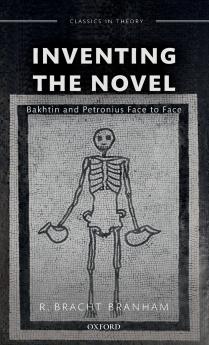
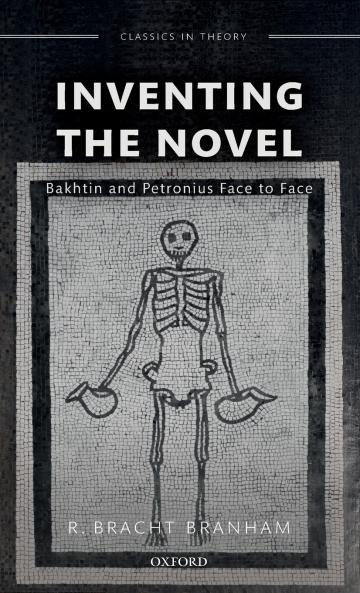
<em>Inventing the Novel</em> uses the work of the Russian philosopher Mikhail Bakhtin (1895-1975) to explore the ancient origins of the modern novel. The analysis focuses on one of the most elusive works of classical antiquity the <em>Satyrica</em> written by Nero's courtier Petronius Arbiter (whose singular suicide described by Tacitus is as famous as his novel). Petronius was the most lauded ancient novelist of the twentieth century and the <em>Satyrica</em> served as the original model for F. Scott Fitzgerald's <em>The Great Gatsby</em> (1925) as well as providing the epigraph for T. S. Eliot's <em>The Waste Land</em> (1922) and the basis for <em>Fellini Satyricon</em> (1969). Bakhtin's work on the novel was deeply informed by his philosophical views: if as a phenomenologist he is a philosopher of consciousness as a student of the novel he is a philosopher of the history of consciousness and it is the role of the novel in this history that held his attention. This volume seeks to lay out an argument in four parts that supports Bakhtin's sweeping assertion that the <em>Satyrica</em> plays an immense role in the history of the novel beginning in Chapter 1 with his equally striking claim that the novel originates as a new way of representing time and proceeding to the question of polyphony in Petronius and the ancient novel.<br>

Piracy-free

Assured Quality

Secure Transactions

Fast Delivery

Sustainably Printed
Details
ISBN 13
9780198841265
Publication Date
-01-01-2020
Pages
-256
Weight
-382 grams
Dimensions
-140x216x15.88 mm
