

English


Paperback
₹4406
(All inclusive*)
Delivery Options
Please enter pincode to check delivery time.
*COD & Shipping Charges may apply on certain items.
Review final details at checkout.
Looking to place a bulk order? SUBMIT DETAILS

Piracy-free

Assured Quality

Secure Transactions
About The Book
Description
Author
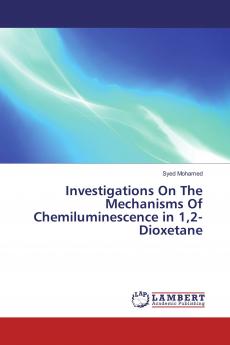
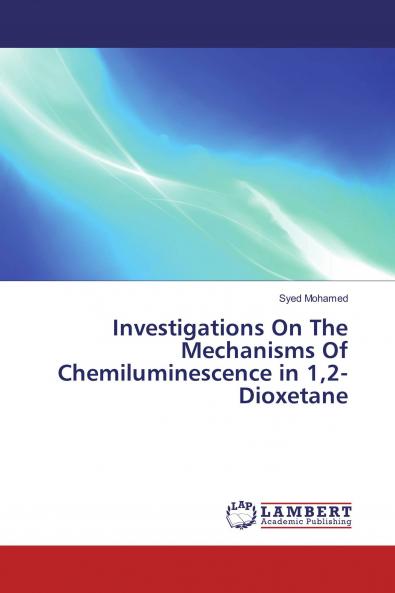
12-dioxetanes are well known for their chemiluminescent dissociation reactions. They possess low stability in general having small or negative entropy. The stability of the 12-dioxetane depends largely on the electronic nature of the substituents attached to the four membered rings. The first chemically synthesized dioxetane namely the 334-trimethyl 12-dioxetane by Kopecky and Mumford decomposes rapidly at room temperature. They assumed that the light was emitted from a singlet excited state. Some of the dioxetanes are even known to explode. On the other hand the half-life at 20° C of the most thermostable Adamantylideneadamantane- 12-dioxetane AAD is more than 20 years and its activation energy for dissociation is about 37 kcal/mol. This book deals with the study of the chemiluminescent reaction mechanism for simple dioxetanes adamantyl xanthyl and acridyl substituted dioxetanes.The chemiluminescent decomposition of simple dioxetanes follows a biradical mechanism via a triplet biradical intermediate while AAD prefers a concerted pathway via the transition state in the singlet excited state.
Piracy-free
Assured Quality
Secure Transactions
Delivery Options
Please enter pincode to check delivery time.
*COD & Shipping Charges may apply on certain items.
Review final details at checkout.
Details
ISBN 13
9783659828140
Publication Date
-17-02-2016
Pages
-196
Weight
-260 grams
Dimensions
-150x220x10.67 mm
