


This Book is Out of Stock!
English



Hardback
₹7921
₹8075
1.91% OFF
(All inclusive*)
Delivery Options
*COD & Shipping Charges may apply on certain items.
Review final details at checkout.
Looking to place a bulk order? SUBMIT DETAILS

Piracy-free

Assured Quality

Secure Transactions
About The Book
Description
Author
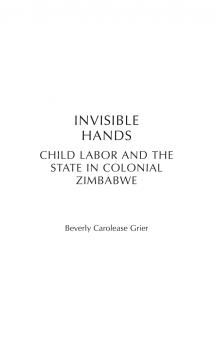
Using a wealth of previously misread or neglected documentation Grier demonstrates that children and adolescents were a major preoccupation of settlers in the mining and agricultural sectors of domestic service and of officials whose task it was to provide conditions favorable to the accumulation of capital. By doing so she uncovers how the youngest workers resisted attempts to control their mobility and labor. Young workers and migrants employed passive and active forms of resistance to assert or maintain their autonomy from patriarchy capital and the state. In addition to being the first historical treatment of child labor and the construction of childhood in African studies this book is one of the few studies of child labor that represents children as active agents in the construction of their own childhood.Grier begins with children and work in the precolonial economy and with preexisting tensions between generations and genders as the basis for understanding why the young of Zimbabwe fled to urban areas during the early colonial period. The theme of resistance or agency continues as child migrants confronted the financial resources of settlers in mining and agriculture and in the state whose task it was to establish and maintain the conditions for capital accumulation. Whether they were employed in the wage labor force or lived by their wits in town boys and as the colonial period unfolded an increasing number of girls presented a threat to the reproduction of the settler economic social and political order. Grier prepares the reader for the subsequent salience of African children as anti-apartheid activists guerrillas child soldiers bandits and street children.
Piracy-free
Assured Quality
Secure Transactions
*COD & Shipping Charges may apply on certain items.
Review final details at checkout.
₹7921
₹8075
1% OFF
Hardback
Out Of Stock
All inclusive*
Details
ISBN 13
9780325001869
Publication Date
-30-11-2005
Pages
-300
Weight
-521 grams
Dimensions
-156x234x17.46 mm
