

English


Paperback
₹1930
₹2487
22.4% OFF
(All inclusive*)
Delivery Options
Please enter pincode to check delivery time.
*COD & Shipping Charges may apply on certain items.
Review final details at checkout.
Looking to place a bulk order? SUBMIT DETAILS

Piracy-free

Assured Quality

Secure Transactions
About The Book
Description
Author
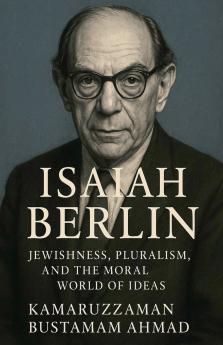
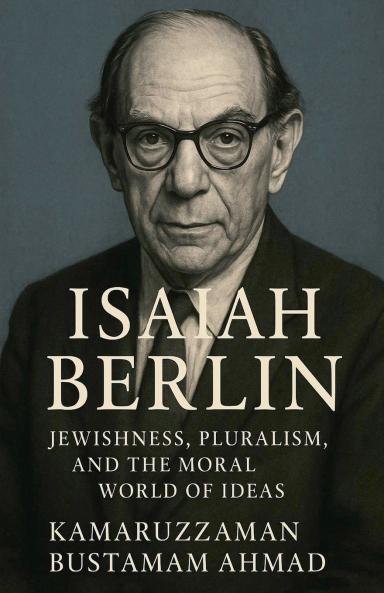
<p>This book is the culmination of a sustained intellectual engagement with the thought of Isaiah Berlin developed over nearly a decade of research writing and critical reflection. It brings together and deepens the author's previous works on Berlin-on pluralism certainty liberalism Jewish identity and the history of ideas-into a single coherent moral interpretation of Berlin's intellectual world.</p><p>Rather than treating Isaiah Berlin as a theorist of isolated concepts such as negative liberty or value pluralism this book reconstructs the moral architecture that underlies his thought. It argues that Berlin's philosophy cannot be separated from the historical experiences that shaped it: Jewish vulnerability exile humiliation assimilation and the persistent threat posed by ideological certainty. From these experiences emerged Berlin's lifelong resistance to monism utopian politics and systems that promise final answers at the cost of human lives.</p><p>Building on the author's earlier studies of Berlin's critique of certainty pluralism as an ethical worldview and the defense of the human world this volume advances a more integrated interpretation. Pluralism is presented not as relativism but as a disciplined moral stance grounded in the reality of tragic choice and irreconcilable values. Liberalism is reinterpreted not as an ideology of progress but as a defensive ethic shaped by memory fear and the need to protect ordinary life from coercion. The history of ideas is shown to function in Berlin's hands as a moral practice rather than a neutral academic method.</p><p>The book also revisits Berlin's reflections on Zionism assimilation and modern Jewish intellectual life through figures such as Heinrich Heine and Karl Marx. These figures are treated as moral case studies rather than historical curiosities revealing the psychological and ethical costs of inclusion without equality and universality without recognition. In dialogue with Berlin's engagement with the Counter-Enlightenment and modern ideology the book clarifies why limits-on power on moral ambition and on historical claims-stand at the center of Berlin's thought.</p><p>This work is intended for readers who approach Isaiah Berlin not merely as a canonical thinker of the twentieth century but as a moral guide for a world once again tempted by certainty polarization and redemptive politics. It speaks to scholars of political philosophy ethics intellectual history and liberal thought while remaining accessible to serious general readers concerned with freedom dignity and the limits of power.</p><p>Taken together with the author's earlier publications on Isaiah Berlin this book represents a mature synthesis: a sustained defense of pluralism as an ethic of restraint a critique of certainty as a source of cruelty and an affirmation of the human world against abstractions that forget the cost of being human.</p>
Piracy-free
Assured Quality
Secure Transactions
Delivery Options
Please enter pincode to check delivery time.
*COD & Shipping Charges may apply on certain items.
Review final details at checkout.
Details
ISBN 13
9798233043000
Publication Date
-14-12-2025
Pages
-142
Weight
-176 grams
Dimensions
-140x216x8.4 mm
