

English


Paperback
₹8513
(All inclusive*)
Delivery Options
Please enter pincode to check delivery time.
*COD & Shipping Charges may apply on certain items.
Review final details at checkout.
Looking to place a bulk order? SUBMIT DETAILS
Delivery Options
Please enter pincode to check delivery time.
*COD & Shipping Charges may apply on certain items.
Review final details at checkout.
About The Book
Description
Author(s)
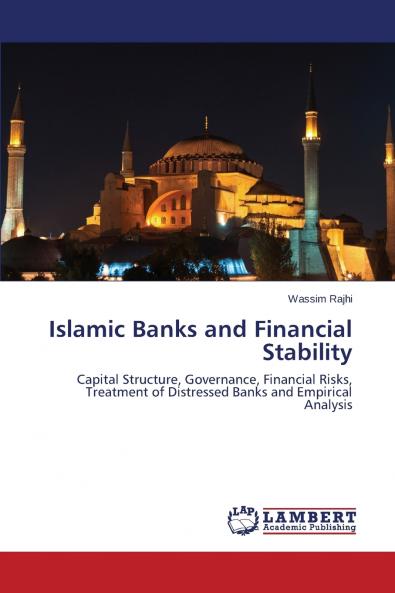
The international financial crisis naturally prompts the question of whether Islamic banks are robust and resilient or may be swept into crisis by a global wave and if so through what channels. This book considers channels through which the world financial crisis would affect Islamic banks their features that may help contain it and those that may foster post crisis recovery in a dual banking system. The relative financial strength of Islamic and conventional banks is assessed empirically based on evidence covering individual banks in 16 banking systems. The z-score has become a popular measure of bank soundness (Boyd and Runkle 1993; Maechler Mitra and Worrell 2005; Beck and Laeven 2006; Laeven and Levine 2006; Hesse and ?ihák 2007 2008; Mercieca Laeven and Levine 2009; Beck; Demirgüç-Kunt and Merrouche 2010). With a robust and quantile estimation model the empirical analysis explores causes of insolvency risk in Middle East and North Africa (MENA) and Southeast Asian countries by controlling for various factors bank-by-bank data macroeconomic and other system-wide indicators. Our sample covers 467 conventional banks and 90 Islamic banks for the period 2000-2008.

Piracy-free

Assured Quality

Secure Transactions

Fast Delivery

Sustainably Printed
Details
ISBN 13
9783848411672
Publication Date
-23-02-2012
Pages
-216
Weight
-299 grams
Dimensions
-150x220x11.7 mm
