


English


Paperback
₹1689
₹1852
8.8% OFF
(All inclusive*)
Delivery Options
Please enter pincode to check delivery time.
*COD & Shipping Charges may apply on certain items.
Review final details at checkout.
Looking to place a bulk order? SUBMIT DETAILS

Piracy-free

Assured Quality

Secure Transactions
About The Book
Description
Author
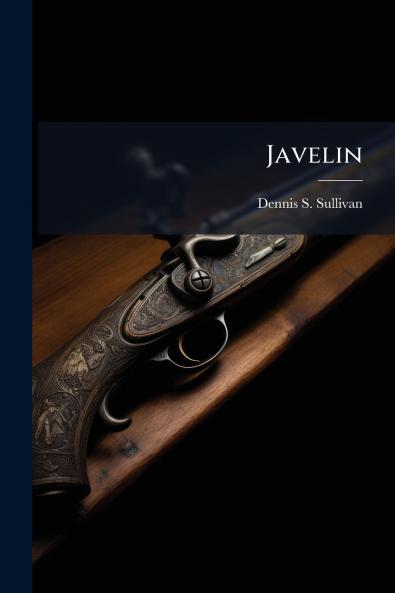
<p>The US Army has completed fielding of the Javelin Antitank Weapon System to Infantry Battalions in the 75th Ranger Regiment and the 82nd Airborne Division. In the year 2000 the fielding team is issuing the Javelin to the Second Infantry Division in Korea. Thus far results from the soldiers and leaders indicate that the fire and forget Javelin is largely accepted as a dramatic improvement over its wire-guided predecessor the Dragon. During numerous fielding tests live fire tests and force on force tests at the National Training Center technological and tactical experts have closely monitored the performance of the Javelin. The capabilities and potential impact of this new weapon system obligates the U.S. Army to examine how it intends to integrate the Javelin system into all warfighting domains. This monograph answers the question whether the introduction of the Javelin into the U.S. Army's Light Infantry Battalions marks the beginning of a revolution in ground antiarmor warfare. This monograph begins with a comparison of the Javelin to the Dragon to demonstrate the significant increase in capabilities. The monograph establishes clear criteria for distinguishing a military revolution from an evolution and establishes the Javelin's link to the U.S. military's present Revolution in Military Affairs (RMA). The Infantry Revolution of the 1300s is examined as an example of a military revolution and antitank guided missile (ATGM) use during the Arab-Israeli War of 1973 is examined as an example of a military evolution. The monograph studies U.S. Army and U.S. Marine Corps relevant doctrinal manuals and text to determine if the introduction of the Javelin has caused any changes in the antiarmor tactics. The review will assess the progress and quality of incorporating Javelin tactics into doctrinal publications and demonstrate that much progress is still needed in developing new tactics for employing Javelin equipped units in both offensive and defensive scenarios. The</p><p>This work has been selected by scholars as being culturally important and is part of the knowledge base of civilization as we know it. This work was reproduced from the original artifact and remains as true to the original work as possible. Therefore you will see the original copyright references library stamps (as most of these works have been housed in our most important libraries around the world) and other notations in the work.</p><p>This work is in the public domain in the United States of America and possibly other nations. Within the United States you may freely copy and distribute this work as no entity (individual or corporate) has a copyright on the body of the work.</p><p>As a reproduction of a historical artifact this work may contain missing or blurred pages poor pictures errant marks etc. Scholars believe and we concur that this work is important enough to be preserved reproduced and made generally available to the public. We appreciate your support of the preservation process and thank you for being an important part of keeping this knowledge alive and relevant.</p>
Piracy-free
Assured Quality
Secure Transactions
Delivery Options
Please enter pincode to check delivery time.
*COD & Shipping Charges may apply on certain items.
Review final details at checkout.
Details
ISBN 13
9781288281060
Publication Date
-12-11-2012
Pages
-62
Weight
-103 grams
Dimensions
-156x234x3.37 mm
