

English


Paperback
₹4055
₹5231
22.48% OFF
(All inclusive*)
Delivery Options
Please enter pincode to check delivery time.
*COD & Shipping Charges may apply on certain items.
Review final details at checkout.
Looking to place a bulk order? SUBMIT DETAILS
Delivery Options
Please enter pincode to check delivery time.
*COD & Shipping Charges may apply on certain items.
Review final details at checkout.
About The Book
Description
Author
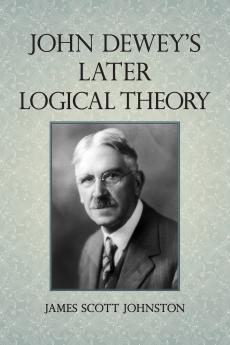
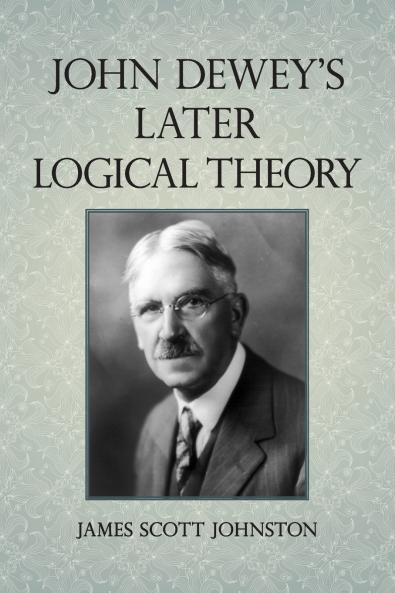
<p><b>A study of the development of Dewey's logic from 1916-1937 leading up to his final 1938 book on the subject.</b></p><p>By 1916 Dewey had written two volumes on logical theory. Yet in light of what he would write in his 1938 <i>Logic: The Theory of Inquiry</i> much remained to be done. Dewey did not yet have an adequate account of experience suitable to explain how our immediate experiencing becomes the material for logical sequences series and causal relations. Nor did he have a refined account of judging propositions and conceptions. Above all his theory of continuity-central to all of his logical endeavors-was rudimentary. The years 1916-1937 saw Dewey remedy these deficiencies. We see in his published and unpublished articles books lecture notes and correspondence the pursuit of a line of thinking that would lead to his magnum opus. <i>John Dewey's Later Logical Theory</i> follows Dewey through his path from <i>Essays in Experimental Logic</i> to the publication of <i>Logic: The Theory of Inquiry</i> and complements James Scott Johnston's earlier volume <i>John Dewey's Earlier Logical Theory</i>.</p>

Piracy-free

Assured Quality

Secure Transactions
Details
ISBN 13
9781438479422
Publication Date
-02-07-2021
Pages
-258
Weight
-354 grams
Dimensions
-152x229x14.84 mm
