


English


₹3796
₹3809
0.34% OFF
(All inclusive*)
Paperback
Delivery Options
Please enter pincode to check delivery time.
*COD & Shipping Charges may apply on certain items.
Review final details at checkout.
Looking to place a bulk order? SUBMIT DETAILS
Delivery Options
Please enter pincode to check delivery time.
*COD & Shipping Charges may apply on certain items.
Review final details at checkout.
About The Book
Description
Author
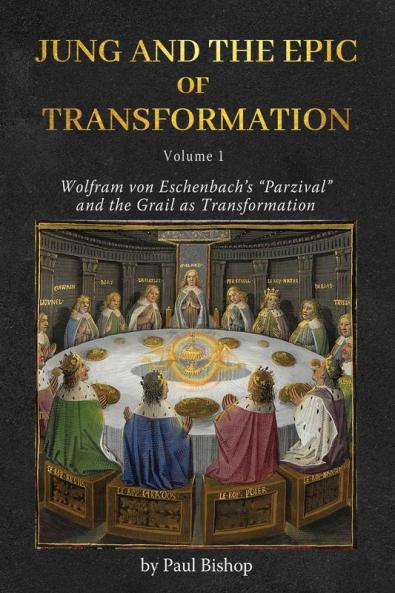
<p><strong>What have the Middle Ages got to do with us? For Jung it seems quite a lot; after all he tells us: I must catch up with a piece of the Middle Ages - within myself adding: We have only finished the Middle Ages - of others. In <em>Wolfram von Eschenbach's Parzival and the Grail as Transformation</em> Paul Bishop considers the significance for Jung of a masterpiece of medieval German literature and a major work in the tradition of the legendary Holy Grail. Wolfram's <em>Parzival </em>epic depicts a three-fold quest: for the hero's identity for <em>vröude</em> (joy) and for the mysterious Grail. In the course of this quest Parzival himself is transformed from a fool into the lord of the Grail and the power of the Grail brings about a collective transformation as well.</strong></p><p><br></p><p>This is the first volume in a series of books examining key texts in German literature and thought that were in Jung's own estimation or by scholarly consent highly influential on his thinking. The project of <em>Jung and the Epic of Transformation</em> consists of four titles sequentially arranged to explore great works from a Jungian perspective and in turn to highlight their importance for interpreting <em>The</em> <em>Red Book</em>.</p><p><br></p><p><strong>Table of Contents</strong></p><p>-List of Abbreviations </p><p>-Grail Studies (in chronological order) </p><p>-Parzival/Parsifal Studies (in chronological order) </p><p>-Editions cited </p><p>-Acknowledgements </p><p><em>-Preface: The Grail and Arthurian Legend </em></p><p>-Chapter 1 An Introduction to Epic </p><p>-Chapter 2 Wolfram's <em>Parzival </em></p><p>-Chapter 3 Jung and the Grail Myth: Analytical Psychology as a New Form of Quest for Transformation </p><p><em>-Bibliography</em></p>

Piracy-free

Assured Quality

Secure Transactions

Fast Delivery

Sustainably Printed
Details
ISBN 13
9781685032258
Publication Date
-01-06-2024
Pages
-396
Weight
-535 grams
Dimensions
-152x229x22.39 mm
