

English


Hardback
₹6373
₹6840
6.83% OFF
(All inclusive*)
Delivery Options
Please enter pincode to check delivery time.
*COD & Shipping Charges may apply on certain items.
Review final details at checkout.
Looking to place a bulk order? SUBMIT DETAILS
Delivery Options
Please enter pincode to check delivery time.
*COD & Shipping Charges may apply on certain items.
Review final details at checkout.
About The Book
Description
Author
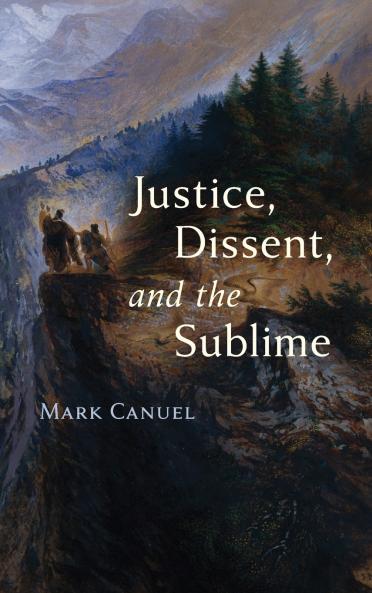
<p><b>Read the Romantics from the perspective of both political theory and literary studies--and consider justice through the lens of the sublime.</b></p><p>In the past ten years theorists from Elaine Scarry to Roger Scruton have devoted renewed attention to the aesthetic of beauty. Part of their discussions claim that beauty--because it arises from a sense of proportion symmetry or reciprocity--provides a model for justice. <i>Justice Dissent and the Sublime</i> makes a significant departure from this mode of thinking. </p><p>Mark Canuel argues that the emphasis on beauty unwittingly reinforces in the name of justice the constraints of uniformity and conventionality. He calls for a more flexible and inclusive connection between aesthetics and justice one founded on the Kantian concept of the sublime. The sublime captures the roles that asymmetry complaint and disagreement play in a complete understanding of a just society--a point the author maintains that was appreciated by a number of Romantic writers including Mary Shelley.</p><p>Canuel draws interesting connections between the debate about beauty and justice and issues in cosmopolitanism queer theory and animal studies.</p>

Piracy-free

Assured Quality

Secure Transactions

Fast Delivery

Sustainably Printed
Details
ISBN 13
9781421405872
Publication Date
-01-07-2012
Pages
-186
Weight
-348 grams
Dimensions
-152x229x14.29 mm
