


This Book is Out of Stock!
English



Hardback
₹10444
(All inclusive*)
Delivery Options
*COD & Shipping Charges may apply on certain items.
Review final details at checkout.
Looking to place a bulk order? SUBMIT DETAILS
*COD & Shipping Charges may apply on certain items.
Review final details at checkout.
₹10444
Out Of Stock
All inclusive*
About The Book
Description
Author
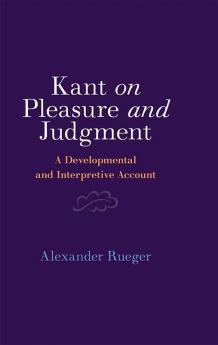
Were there interactions between the development of Kant''s aesthetics and the development of his moral philosophy? How did Kant view pleasure and displeasure and what role did they play in the formation of his system of the faculties? In this book Alexander Rueger situates Kant''s account of pleasure and displeasure in its eighteenth-century context with special attention to Leibniz Wolff Crusius and Mendelssohn. He traces the development of Kant''s views on pleasure from the 1770s to his Critique of Aesthetic Judgment in 1790 and shows that throughout Kant understood pleasure as the satisfaction of faculty interests. The significance of this theory for the completion of Kant''s critical system in the third Critique is discussed in detail. Rueger''s study illuminates both the role of pleasure and displeasure in Kant''s thought and their important connections to the power of judgment.

Piracy-free

Assured Quality

Secure Transactions

Fast Delivery

Sustainably Printed
Details
ISBN 13
9781009380348
Publication Date
-13-03-2024
Pages
-234
Weight
-411 grams
Dimensions
-152.4x228.6x14.02 mm
