


English



Paperback
₹1695
(All inclusive*)
Delivery Options
Please enter pincode to check delivery time.
*COD & Shipping Charges may apply on certain items.
Review final details at checkout.
Looking to place a bulk order? SUBMIT DETAILS
Delivery Options
Please enter pincode to check delivery time.
*COD & Shipping Charges may apply on certain items.
Review final details at checkout.
About The Book
Description
Author
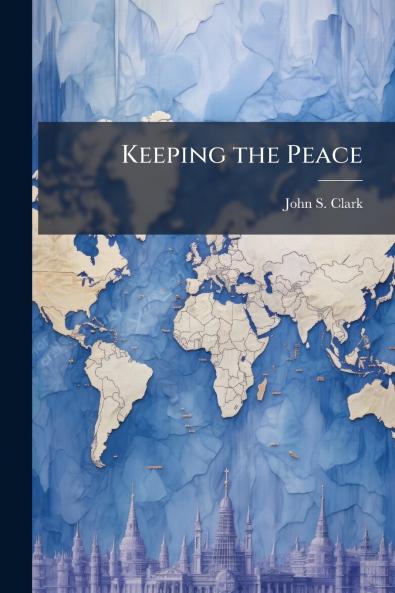
<p>During the Cold War the United Nations developed the mission termed peacekeeping to help manage conflict. These peace operations helped save millions of lives prevented conflicts from escalating and provided an environment for the political settlement of disputes despite the superpower conflict. In the aftermath of the Cold War the United Nations found itself freer to act than at any time in its history and the demands placed on the organization quickly outstripped its ability to cope. This thesis examines the role of regional organizations in the conduct of peacekeeping. It asks if the international community's singular focus on the United Nations as the vehicle for peacekeeping prevented the regional organizations from contributing more to international security. Furthermore if the regional organizations could contribute significantly to international peace then what role should the Defense Department play in supporting these efforts?Regional organizations have conducted peacekeeping operations in the past with mixed results. This thesis examines the intervention by the Organization of American States (OAS) into the Dominican Republic in 1965 the OAS role in the Central American peace process in the late 1980s and the intervention by the Economic Community of West African States into Liberia in 1990. These operations illustrate several salient features of regional organizations conducting peacekeeping.This study concludes that in order for peacekeepers to achieve their mandate it is critical to possess strong political will and a minimum of operational support. Furthermore regional organizations run the gamut in both political will and operational capability. Their performance indicates that when their national interests are at stake the regionals demonstrate the required political will to persevere in a mission. Furthermore they indicate an increasingly strong determination to participate in peacekeeping missions.</p><p>This work has been selected by scholars as being culturally important and is part of the knowledge base of civilization as we know it. This work was reproduced from the original artifact and remains as true to the original work as possible. Therefore you will see the original copyright references library stamps (as most of these works have been housed in our most important libraries around the world) and other notations in the work.</p><p>This work is in the public domain in the United States of America and possibly other nations. Within the United States you may freely copy and distribute this work as no entity (individual or corporate) has a copyright on the body of the work.</p><p>As a reproduction of a historical artifact this work may contain missing or blurred pages poor pictures errant marks etc. Scholars believe and we concur that this work is important enough to be preserved reproduced and made generally available to the public. We appreciate your support of the preservation process and thank you for being an important part of keeping this knowledge alive and relevant.</p><br>

Piracy-free

Assured Quality

Secure Transactions

Fast Delivery

Sustainably Printed
Details
ISBN 13
9781025140056
Publication Date
-22-05-2025
Pages
-88
Weight
-139 grams
Dimensions
-156x234x4.63 mm
