


Eng


₹1829
₹2294
20.27% OFF
(All inclusive*)
Paperback
Delivery Options
Please enter pincode to check delivery time.
*COD & Shipping Charges may apply on certain items.
Review final details at checkout.
Looking to place a bulk order? SUBMIT DETAILS
Delivery Options
Please enter pincode to check delivery time.
*COD & Shipping Charges may apply on certain items.
Review final details at checkout.
About The Book
Description
Author
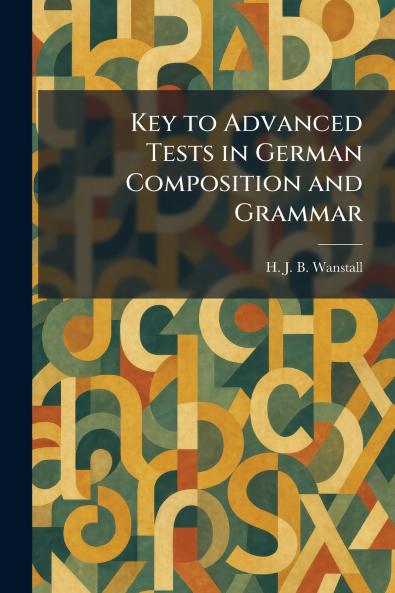
<p>Key to Advanced Tests in German Composition and Grammar is a specialized pedagogical resource designed for students and educators navigating the complexities of advanced German language study. This work provides the necessary solutions and model answers for exercises focusing on sophisticated grammatical structures and the art of written composition. By offering a clear guide to the challenging tests presented in its companion volume it serves as an indispensable tool for mastering the intricacies of German syntax vocabulary and stylistic nuances.</p><p>The content emphasizes high-level linguistic proficiency addressing common pitfalls in translation and sentence construction. Key to Advanced Tests in German Composition and Grammar is structured to assist learners in refining their ability to express complex ideas fluently and accurately in written German. As a document of historical language instruction it reflects a rigorous academic approach to foreign language mastery making it a valuable reference for those interested in the evolution of German philology and the traditional methods of linguistic training.</p><p>This work has been selected by scholars as being culturally important and is part of the knowledge base of civilization as we know it. This work was reproduced from the original artifact and remains as true to the original work as possible. Therefore you may see the original copyright references library stamps (as most of these works have been housed in our most important libraries around the world) and other notations in the work.</p><p>This work is in the public domain in the United States of America and possibly other nations. Within the United States you may freely copy and distribute this work as no entity (individual or corporate) has a copyright on the body of the work.</p><p>As a reproduction of a historical artifact this work may contain missing or blurred pages poor pictures errant marks etc. Scholars believe and we concur that this work is important enough to be preserved reproduced and made generally available to the public. We appreciate your support of the preservation process and thank you for being an important part of keeping this knowledge alive and relevant.</p>

Piracy-free

Assured Quality

Secure Transactions

Fast Delivery

Sustainably Printed
Details
ISBN 13
9781025359649
Publication Date
-14-02-2026
Pages
-104
Weight
-161 grams
Dimensions
-156x234x5.47 mm
