

English


Hardback
₹6866
₹9490
27.65% OFF
(All inclusive*)
Delivery Options
Please enter pincode to check delivery time.
*COD & Shipping Charges may apply on certain items.
Review final details at checkout.
Looking to place a bulk order? SUBMIT DETAILS
Delivery Options
Please enter pincode to check delivery time.
*COD & Shipping Charges may apply on certain items.
Review final details at checkout.
About The Book
Description
Author
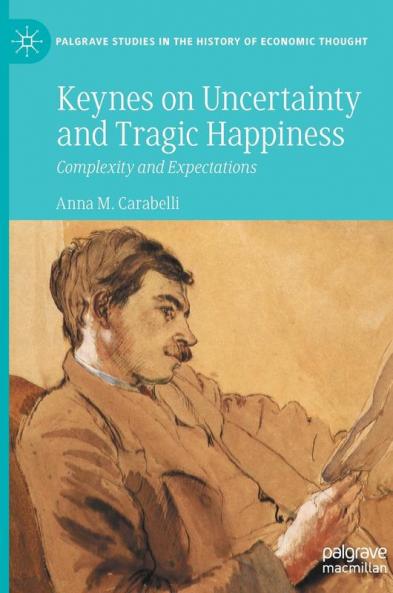
<p>Most economists who read the&nbsp;<i>General Theory&nbsp;</i>candidly admitted that they could not understand the theoretical apparatus and found it easy to recast it in traditional terms. This book provides a masterful guide to the generally unrecognized methodological revolution that supported the new theoretical concepts -- a veritable lodestone that complements and expands understanding on the treatment of the economic magnitudes appropriate to the ideal of generality in the social sciences to the applicability&nbsp; of probability to the formulation of decision-making under uncertainty and the foundations of economic policy in interdependent economic systems.&nbsp; &nbsp; &nbsp; &nbsp; &nbsp; &nbsp; &nbsp; &nbsp; &nbsp; &nbsp; &nbsp; &nbsp; &nbsp; &nbsp; &nbsp; &nbsp; &nbsp; &nbsp; &nbsp; &nbsp; &nbsp; &nbsp; &nbsp; &nbsp; &nbsp; &nbsp; &nbsp; &nbsp; &nbsp; &nbsp; &nbsp; &nbsp; &nbsp; &nbsp; &nbsp; &nbsp; &nbsp; &nbsp; &nbsp; &nbsp; &nbsp; &nbsp; &nbsp; _Jan Kregel Levy&nbsp; Economics Institute</p><p>Anna Carabelli sets out Keynes’s understanding of economics as a way of thinking encompassing method and morals rather than as a doctrine. She does so with her customary admirable scholarship and also her willingness to take controversial positions. I commend the volume most highly to Keynes scholars as a drawing-together and development of the themes that Carabelli has pursued since the publication of her 1988 classic&nbsp;<i>On Keynes’s Method</i>. Further Keynes’s approach was designed to be applied to different contexts so I enthusiastically recommend the volume also as a foundation and guide for anyone open to such a ‘new way of reasoning in economics’ for the modern era.&nbsp; &nbsp; &nbsp; &nbsp; _Sheila Dow University of Stirling&nbsp;</p><p>This book examines the philosophy and methodology of Keynes highlighting its novelty and how it presented a new form of economic reasoning. Exploring Keynes’s&nbsp;use of non-demonstrative logic based onprobability commonalities are found in&nbsp;his economics&nbsp;ethics aesthetics and international relations. Insights are provided into his reasoning and his approach to uncertainty rationality measurability&nbsp;of complex magnitudes moral and rational dilemmas and irreducible conflicts.</p><p>This book investigates&nbsp;methodological continuity within Keynes’s&nbsp;work in particular in relation to&nbsp;uncertainty&nbsp;complexity incommensurability happiness and openness. It will be relevant to students and researchers interested in Keynes probability ambiguity ethics&nbsp;and the history of economic thought.</p>

Piracy-free

Assured Quality

Secure Transactions

Fast Delivery

Sustainably Printed
Details
ISBN 13
9783030756642
Publication Date
-24-07-2021
Pages
-192
Weight
-332 grams
Dimensions
-148x210x14.29 mm
