

English


Paperback
₹2304
₹2579
10.66% OFF
(All inclusive*)
Delivery Options
Please enter pincode to check delivery time.
*COD & Shipping Charges may apply on certain items.
Review final details at checkout.
Looking to place a bulk order? SUBMIT DETAILS
Delivery Options
Please enter pincode to check delivery time.
*COD & Shipping Charges may apply on certain items.
Review final details at checkout.
About The Book
Description
Author
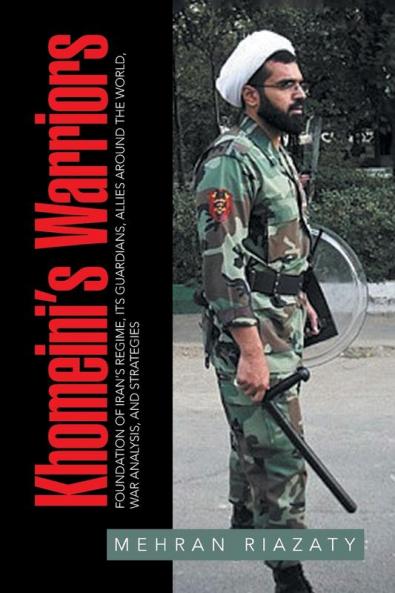
This Book Analyzes Ayatollah Khomeinis Ideology Irans Official And Unofficial Armed Forces And Its Allies Throughout The World And Provides Photographs Of The Regimes Predominant Actors. . Since 1892 The Shia Clergy Has Played A Major Role In Iran Such As The Tobacco Boycott Which Led To The Withdrawal Of The Concession Given By The Shah To British Citizens Irans Constitutional Revolution Of 1906 As Well As Organizing Opposition To The Shahs Policies In The 1979 Revolution. Ayatollah Khomeini Was A Lecturer At Hawza Ilmiyya (Shia Seminary Of Traditional Islamic School Of Higher Learning) Of Najaf And Qom For Decades Before He Came On To The Iranian Political Scene. In 1977 Khomeini Assumed The Mantle Of Leadership Within The Islamist Opposition After The Death Of Ali Shariati A Leftist Intellectual And One Of The Most Influential Iranian Muslim Thinkers Of His Generation. In 1930 Shariati Contributed A New Line Of Thinking In Iran Through His Reinterpretation Of Jihad And Shahadat (Martyrdom) Which Was Presented In His View Of An Authentic Islam. Shariatis New Authentic Islam Centered On A Reinterpretation Of The Story Of Karbala Where Imam Hussein Was Martyred In A Battle Refusing To Pledge Allegiance To Yazid The Umayyad Caliph. Shariati Borrowed The Christian Concept Of Martyrdom From The Crucifixion And Resurrection Of Jesus As The Basis Of His New Islamic Philosophy. Shariati Wrote That When Faced With The Possibility Of Ones Own Death One Must Adopt An Attitude Of Freedom-Toward-Death And Thereby Experience Authentic Living. In 1978 Ayatollah Khomeinis Reinterpretation Of Shia Rituals Removed The Borders Between The Audience And The Actors Turning The Entire Country Into A Stage For His Casting. He Imbued The Old Passion Of The Story Of Karbala With A New Passionate Hatred For The Shahs Unjust Rule In Iran As Well As Israels And The United Statess Influences Within The World. . Khomeinis Memory Of Dr. Mohammed Mosaddegh Whose Government Was Toppled By The Cia In 1953 Returning The Shah To Iran Resulted In The Rise Of Various Political Groups Such As Nationalists Liberals Secularists And Marxists. These Groups Were Essential In Assisting Khomeinis Overthrow Of The Shah Though They Were Soon Stomped Out By The Creation Of The Islamic Revolutionary Guard Corps (Irgc) In May 1979 In Order To Protect Khomeinis Unique Brand Of A Shia Islamic Revolution. The Iran-Iraq War Initiated The Rapid Expansion Of The Irgcs Size And Capabilities. In September 1980 The Irgc Had Only 30000 Men In Lightly Armed Units. Prior To The War The Irgc Personnel Were Very Young In Age And Had Little To No Military Experience. By The Summer Of 1981 The Irgc Had Organized Basic Training Centers With Experienced Commanders And A Select Group Of Regular Officers. They Also Had 50000 Members And Its Strength Would Jump To 100000 In 1983 And 250000 In 1985. In Order To Meet All Its Manpower Needs On The Iraq War Front The Irgc Then Turned To Its Volunteer Militia The Basij. The Basij Members Provided More Troops Than The Irgc Could Arm. The Average Basij Member Came From Irans Rural Areas And Can Be Described As Poor Uneducated And Ranged In Age From Twelve To Thirty Years Old. Like The Irgc The Basij Members Are Motivated By Both Religion And Ideology. After The Iran-Iraq War The Irgc Focused On External Threats As The Basij Increased Its Involvement In Domestic Affairs. In Past Years The Basij Militia Has Been Active In Controlling Public Gatherings And Disrupting Demonstrations By Civil Or Student Activists.

Piracy-free

Assured Quality

Secure Transactions

Fast Delivery

Sustainably Printed
Details
ISBN 13
9781514470329
Publication Date
-11-05-2016
Pages
-600
Weight
-801 grams
Dimensions
-152x229x33.87 mm
