


This Book is Out of Stock!
English


Hardback
₹10303
₹15500
33.53% OFF
(All inclusive*)
Delivery Options
*COD & Shipping Charges may apply on certain items.
Review final details at checkout.
Looking to place a bulk order? SUBMIT DETAILS
*COD & Shipping Charges may apply on certain items.
Review final details at checkout.
₹10303
₹15500
33% OFF
Hardback
Out Of Stock
All inclusive*
About The Book
Description
Author(s)
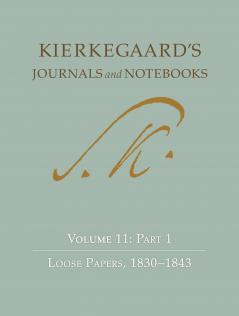
<p>For over a century the Danish thinker Søren Kierkegaard (1813-55) has been at the center of a number of important discussions concerning not only philosophy and theology but also more recently fields such as social thought psychology and contemporary aesthetics especially literary theory. <p/>Despite his relatively short life Kierkegaard was an extraordinarily prolific writer as attested to by the 26-volume Princeton University Press edition of all of his published writings. But Kierkegaard left behind nearly as much unpublished writing most of which consists of what are called his journals and notebooks. Kierkegaard has long been recognized as one of history's great journal keepers but only rather small portions of his journals and notebooks are what we usually understand by the term diaries. By far the greater part of Kierkegaard's journals and notebooks consists of reflections on a myriad of subjects--philosophical religious political personal. Studying his journals and notebooks takes us into his workshop where we can see his entire universe of thought. We can witness the genesis of his published works to be sure--but we can also see whole galaxies of concepts new insights and fragments large and small of partially (or almost entirely) completed but unpublished works. <i>Kierkegaard's Journals and Notebooks </i>enables us to see the thinker in dialogue with his times and with himself. <p/>Kierkegaard wrote his journals in a two-column format one for his initial entries and the second for the extensive marginal comments that he added later. This edition of the journals reproduces this format includes several photographs of original manuscript pages and contains extensive scholarly commentary on the various entries and on the history of the manuscripts being reproduced. <p/>Volume 11 Parts 1 and 2 present an exciting enlightening and enormously varied treasure trove of papers that were found carefully sorted and stored by Kierkegaard himself in his apartment after his death. These papers--many of which have never before been published in English--provide a window into many different aspects of Kierkegaard's life and creativity. Volume 11 Part 2 includes writings from the period between 1843 the year in which he published his breakthrough <i>Either/Or</i> and late September 1855 a few weeks before his death when he recorded his final reflections on Christendom. Among the highlights are Kierkegaard's famous description of the Great Earthquake that shaped his life; his early reflections on becoming an author; his important though never-delivered lectures on The Dialectic of Ethical and Ethical-Religious Communication; and his final incandescent assault on the tendency--new in his time--to harness Christianity in support of a specific social and political order.</p>

Piracy-free

Assured Quality

Secure Transactions

Fast Delivery

Sustainably Printed
Details
ISBN 13
9780691197302
Publication Date
-05-05-2020
Pages
-784
Weight
-1383 grams
Dimensions
-190x251x47.86 mm
